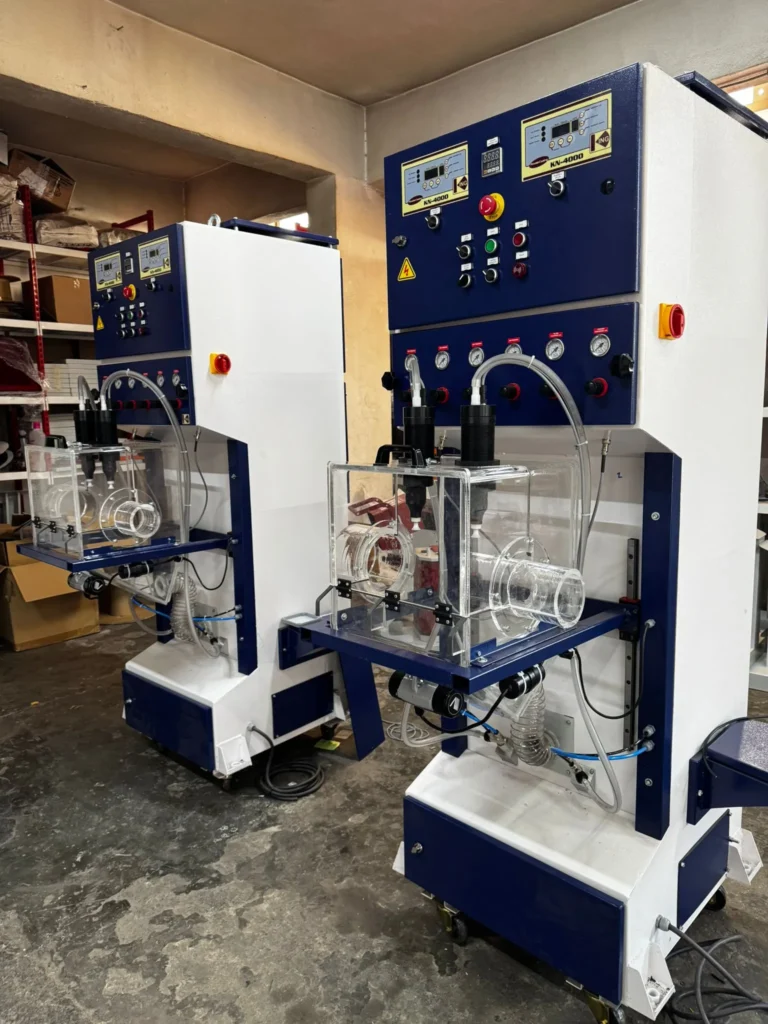
A cable powder talc coating machine is a device used to apply a thin layer of talcum powder to the surface of a cable. This coating helps to reduce friction and wear between the cable and its surroundings, and it also helps to protect the cable from moisture and corrosion.
A cable powder talc coating machine is a device used to apply a thin layer of talcum powder to the surface of a cable. This powder coating provides a number of benefits, including:
- Reducing friction: Talcum powder is a lubricant, which helps to reduce friction between the cable and its surroundings. This can be important for cables that are exposed to movement or wear and tear.
- Protecting the cable from moisture: Talcum powder is a hydrophobic substance, which means that it repels water. This can help to protect the cable from moisture damage, which can cause corrosion and electrical problems.
- Improving the electrical properties of the cable: Talcum powder can help to improve the electrical properties of the cable, such as its insulation resistance. This can be important for cables that are used in high-voltage applications.
- Reducing the risk of fire: Talcum powder is a non-combustible substance, which can help to reduce the risk of fire. This can be important for cables that are used in hazardous environments.
Cable powder talc coating machines are typically used in the following industries:
- Automotive: Cable powder talc coating machines are used to coat automotive cables, such as brake cables, throttle cables, and shift cables.
- Aerospace: Cable powder talc coating machines are used to coat aerospace cables, such as flight control cables and landing gear cables.
- Electronics: Cable powder talc coating machines are used to coat electronic cables, such as power cables and data cables.
- General manufacturing: Cable powder talc coating machines are used to coat a wide variety of cables in the general manufacturing industry.
Cable powder talc coating machines are typically used in the following industries:
- Electrical: Cable powder talc coating machines are used to coat electrical cables, such as power cables, data cables, and coaxial cables.
- Automotive: Cable powder talc coating machines are used to coat automotive cables, such as battery cables, ignition cables, and sensor cables.
- Telecommunications: Cable powder talc coating machines are used to coat telecommunications cables, such as fiber optic cables and coaxial cables.
- Aerospace: Cable powder talc coating machines are used to coat aerospace cables, such as aircraft cables and spacecraft cables.
EMS Powder and Talc Coating Machine for Cables
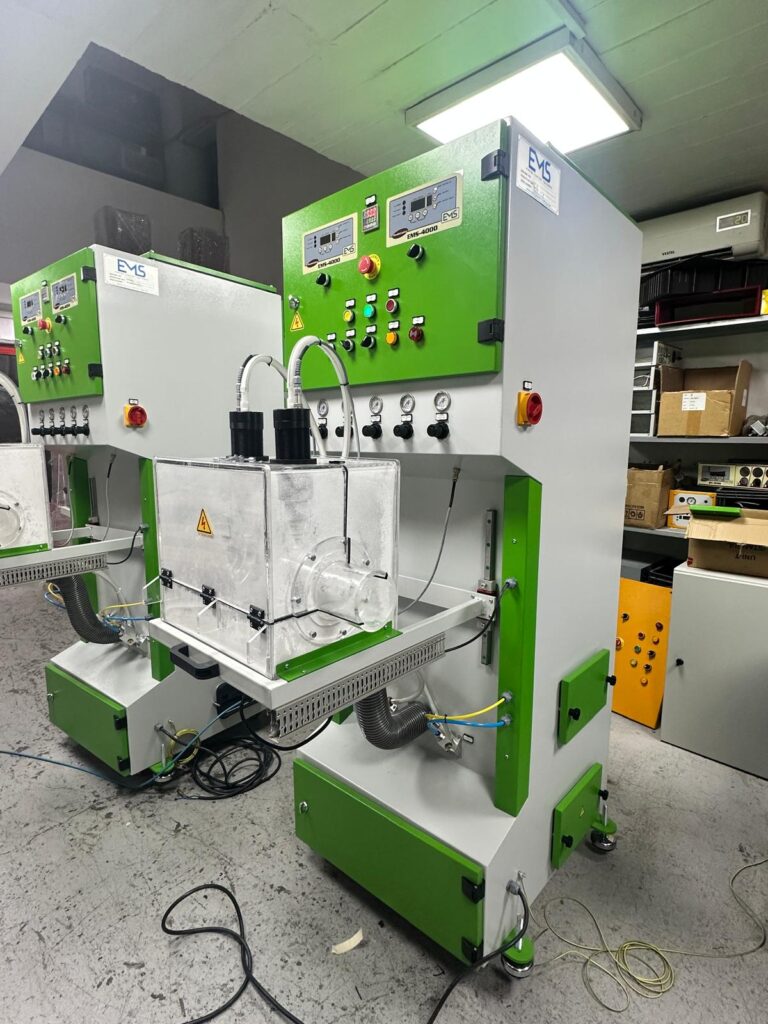
The EMS Powder and Talc Coating Machine for Cables has been engineered to provide cable manufacturers with a reliable, efficient, and highly accurate method of applying powder coatings to insulated cables during production. In modern cable manufacturing, maintaining product quality while increasing production speed is one of the industry’s greatest challenges. Small variations in powder application can result in cables sticking together, uneven winding, surface damage, or excessive powder consumption. EMS has developed a solution that combines precision engineering with user-friendly operation to eliminate these issues and deliver consistently excellent results.
Designed for continuous operation in demanding industrial environments, the machine ensures that every meter of cable receives the correct amount of powder regardless of cable diameter or production speed. Manufacturers benefit from improved cable appearance, smoother handling, better packaging quality, and reduced maintenance requirements throughout the production line. The machine integrates easily into both new and existing cable extrusion lines and can be customized to meet specific production requirements.
The EMS system is suitable for manufacturers producing electrical power cables, communication cables, automotive wiring, fiber optic cables, building wires, industrial control cables, renewable energy cables, and numerous specialty cable products. Its flexibility allows manufacturers to process multiple cable sizes with minimal adjustment while maintaining exceptional coating consistency. By reducing production interruptions and minimizing powder waste, the machine quickly becomes a valuable investment that improves productivity and lowers operating costs.
What is a Cable Powder and Talc Coating Machine?
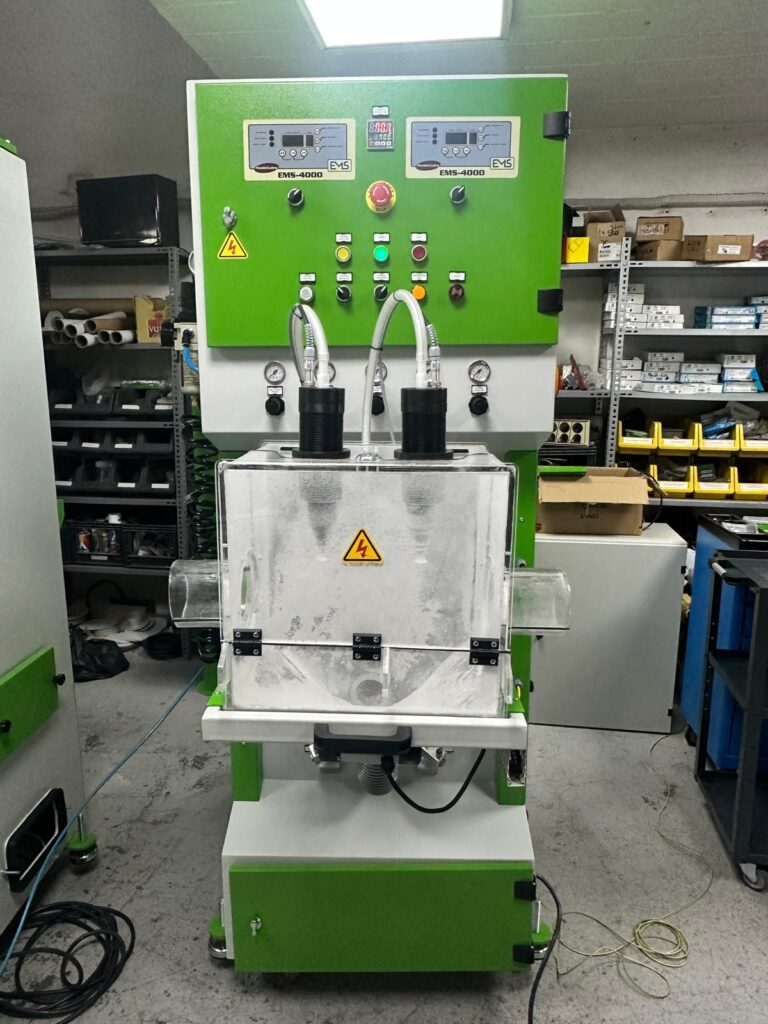
A cable powder and talc coating machine is a specialized piece of equipment installed within a cable extrusion line to apply a thin, uniform layer of talcum powder or other fine industrial powders onto the outer surface of insulated cables. This coating process typically takes place immediately after the cable has passed through the cooling section and has been dried, ensuring that the insulation surface is ready for powder application before entering the take-up system.
Although the coating itself is almost invisible, it plays an essential role in maintaining cable quality throughout manufacturing, transportation, storage, and installation. The powder forms a protective barrier that significantly reduces surface friction, preventing cables from sticking to each other while allowing them to unwind smoothly from reels during later processing or installation.
Without proper powder coating, freshly extruded insulation materials may retain slight surface tackiness, particularly during warm production conditions. As cables are wound tightly onto reels, adjacent cable layers can adhere to one another, making unwinding difficult and increasing the risk of insulation damage. A properly designed powder coating machine eliminates these problems by ensuring complete and uniform coverage over the entire cable circumference.
Modern cable manufacturers demand equipment capable of operating continuously at high production speeds while maintaining consistent powder distribution. EMS has developed its powder coating machine to satisfy these requirements through precise powder control, stable airflow management, and optimized coating chamber design. The result is a reliable process that improves both product quality and production efficiency.
Why Talc Coating is Essential in Cable Manufacturing
Talc coating has become a standard process in cable manufacturing because it provides multiple functional and economic benefits throughout the production cycle. Insulation materials such as PVC, polyethylene, XLPE, silicone, and rubber often exhibit slight surface adhesion after extrusion. Even after passing through cooling tanks, these materials can remain sufficiently tacky to cause handling problems if left untreated.
Applying a controlled layer of talcum powder significantly reduces surface friction between adjacent cable layers. This prevents cables from sticking together during winding, storage, transportation, and installation. Manufacturers experience fewer production interruptions because take-up systems operate more smoothly and reels are wound more uniformly.
Another important advantage is protection of the insulation surface. During winding, cables constantly slide against guide rollers, pulleys, and neighboring cable layers. Without adequate lubrication provided by powder coating, microscopic scratches and abrasion can develop on the insulation surface. Although these imperfections may appear minor, they can reduce the overall visual quality of the finished product and increase customer complaints.
Talc coating also improves the efficiency of automatic cable handling systems. Automated coiling, rewinding, packaging, and cutting equipment all perform more reliably when cable surfaces exhibit consistent friction characteristics. Reduced friction decreases mechanical stress on production equipment while allowing higher production speeds with fewer stoppages.
For manufacturers seeking to improve product quality while minimizing operational costs, a reliable talc coating system represents an essential component of a modern cable extrusion line.
Advanced Powder Distribution Technology
The quality of any cable powder coating system depends largely on its ability to distribute powder evenly around the entire circumference of the cable. Uneven powder application results in visible coating inconsistencies, localized sticking, increased powder consumption, and unnecessary cleaning requirements. EMS has addressed these challenges through the development of an advanced powder distribution system specifically optimized for continuous cable production.
Inside the coating chamber, carefully engineered airflow patterns ensure that powder particles remain suspended long enough to achieve complete surface coverage before excess material is recovered. The cable passes through a controlled powder cloud where every section of the cable receives an identical coating regardless of production speed or cable orientation.
Unlike conventional gravity-fed systems that often produce inconsistent coating thicknesses, the EMS design maintains stable powder concentration throughout extended production runs. This consistency minimizes operator intervention while ensuring repeatable product quality from the first cable reel to the last.
The optimized chamber geometry also reduces powder turbulence that can lead to excessive powder loss or contamination of surrounding equipment. As a result, manufacturers benefit from cleaner production environments, lower powder consumption, and improved overall efficiency.
Advanced distribution technology further enables rapid product changeovers. Operators can adjust powder settings quickly for different cable diameters without lengthy cleaning procedures or complicated mechanical adjustments, allowing greater production flexibility and shorter setup times.
EMS Powder and Talc Coating Machine for Cable Manufacturing
The EMS Powder and Talc Coating Machine for Cables is a high-performance industrial solution designed to apply a precise and uniform layer of talc or powder onto electrical cables, communication cables, fiber optic cables, automotive cables, and various insulated wire products. Developed with advanced engineering and years of manufacturing experience, EMS cable powder coating systems help cable manufacturers improve production efficiency, prevent cable sticking, enhance insulation protection, and ensure smooth winding and packaging operations.
Modern cable production requires consistent quality, high production speeds, and minimal maintenance. The EMS Powder and Talc Coating Machine has been specifically designed to meet these demanding requirements by providing accurate powder dosing, excellent powder distribution, low powder consumption, and reliable long-term operation.
Whether producing PVC cables, XLPE cables, PE insulated wires, rubber cables, or specialty industrial cables, EMS offers a powder coating solution that integrates seamlessly into existing cable extrusion lines.
What is a Cable Powder and Talc Coating Machine?
A cable powder coating machine is an automated system that applies a controlled amount of talcum powder or other specialized coating powders onto the surface of insulated cables immediately after the cooling stage of cable extrusion.
The powder serves several important purposes:
- Prevents cables from sticking together
- Reduces friction during winding
- Improves cable handling
- Protects insulation surfaces
- Enhances packaging quality
- Improves cable flexibility during storage
- Prevents moisture accumulation
- Reduces surface abrasion
EMS machines guarantee that every meter of cable receives the same amount of powder regardless of production speed.
Why Talc Coating is Essential in Cable Manufacturing
Cable insulation materials such as PVC, XLPE, EVA, PE, Silicone, TPU, and Rubber often remain slightly tacky after extrusion and cooling. Without proper talc application:
- Cable layers may stick together.
- Winding becomes difficult.
- Cable reels become uneven.
- Surface damage may occur.
- Packaging quality decreases.
- Automatic winding systems may experience interruptions.
EMS Powder Coating Machines eliminate these problems through uniform and adjustable powder application.
Advanced Powder Distribution Technology
Unlike conventional gravity-fed powder systems, EMS utilizes an optimized powder circulation and distribution system that ensures:
- Uniform powder coverage
- Minimal powder waste
- Stable coating thickness
- High-speed operation
- Continuous production
The specially designed coating chamber distributes powder evenly around the entire cable circumference.
This results in superior coating quality even at very high cable production speeds.
High Precision Powder Feeding System
One of the most critical components of any powder coating machine is the feeding mechanism.
EMS machines utilize:
- Adjustable powder dosage
- Continuous powder circulation
- Controlled powder flow
- Automatic feeding options
- Stable powder pressure
- Low powder consumption
This precision minimizes operating costs while maximizing coating consistency.
Suitable for All Cable Types
The EMS Cable Powder Coating Machine is suitable for numerous cable products including:
Electrical Power Cables
- Low voltage cables
- Medium voltage cables
- High voltage cables
- Building wires
Communication Cables
- LAN cables
- Telephone cables
- Coaxial cables
- Signal cables
Fiber Optic Cables
- Indoor fiber cables
- Outdoor fiber cables
- Micro fiber cables
Automotive Cables
- Battery cables
- Sensor cables
- Control cables
- Engine wiring
Industrial Cables
- Mining cables
- Marine cables
- Solar cables
- Wind power cables
- Oil & gas cables
- Flexible industrial cables
Compatible Insulation Materials
EMS machines work with numerous insulation materials including:
- PVC
- XLPE
- PE
- HDPE
- LDPE
- Silicone
- Rubber
- EVA
- TPU
- TPE
- Halogen-free compounds (HFFR / LSZH)
Powder Types Supported
The EMS Powder Coating Machine can handle a wide variety of coating materials including:
- Talcum powder
- Industrial talc
- Magnesium silicate
- Calcium carbonate
- Anti-block powders
- Lubricating powders
- Special polymer powders
- Fine mineral powders
Adjustable Powder Coating Thickness
Different cable types require different powder quantities.
EMS systems allow operators to easily adjust:
- Powder density
- Powder flow rate
- Air pressure
- Coating thickness
- Powder recovery settings
This flexibility enables manufacturers to optimize coating for each production line.
High-Speed Production Capability
Cable manufacturers continuously increase production speeds.
EMS machines are designed for modern extrusion lines operating from low-speed specialty cable production up to very high-speed continuous manufacturing.
Benefits include:
- Stable coating at high speeds
- No powder interruption
- Consistent coverage
- Excellent cable appearance
Powder Recovery System
One of the biggest operating expenses in cable manufacturing is powder consumption.
EMS integrates optional powder recovery technology that:
- Collects unused powder
- Filters contaminants
- Returns clean powder to production
- Reduces waste
- Lowers operating costs
- Improves factory cleanliness
Stainless Steel Construction
All product-contact surfaces are manufactured from high-quality stainless steel.
Advantages include:
- Corrosion resistance
- Easy cleaning
- Long service life
- Hygienic operation
- Excellent durability
Dust-Free Working Environment
Powder contamination is a common issue in cable factories.
EMS powder coating systems feature:
- Closed coating chambers
- Sealed powder circulation
- Efficient extraction systems
- Industrial filtration
- Clean working environment
This improves operator safety and factory cleanliness.
Easy Integration into Cable Extrusion Lines
EMS Powder Coating Machines can be installed after:
- Cooling trough
- Drying unit
- Air wiping system
and before:
- Spark tester
- Diameter gauge
- Meter counter
- Caterpillar
- Take-up machine
This makes installation simple for both new and existing production lines.
Intelligent Control System
Optional PLC control provides:
- Automatic powder feeding
- Recipe storage
- Production monitoring
- Alarm systems
- Touchscreen interface
- Remote diagnostics
- Production statistics
Operators can quickly change settings for different cable sizes.
Low Maintenance Design
EMS machines have been engineered to reduce downtime.
Features include:
- Quick powder chamber access
- Easy cleaning
- Replaceable filters
- Durable components
- Long-life motors
- Minimal wear parts
Routine maintenance can be completed within minutes.
Energy Efficient Operation
The EMS Powder Coating Machine consumes very little electrical power while delivering excellent coating performance.
Benefits include:
- Lower electricity consumption
- Reduced compressed air usage
- Lower production costs
- Environmentally friendly operation
Advantages of EMS Cable Powder Coating Machines
Choosing EMS provides numerous production advantages:
- Uniform powder application
- Reduced cable sticking
- Lower friction
- Better winding quality
- Reduced powder consumption
- High-speed capability
- Automatic powder control
- Clean production environment
- Easy maintenance
- Long machine life
- Low operating costs
- High production efficiency
- Consistent product quality
- Reliable industrial performance
Industries Served
EMS Powder and Talc Coating Machines are widely used in:
- Cable manufacturing plants
- Electrical wire manufacturers
- Fiber optic cable producers
- Automotive cable factories
- Appliance cable manufacturers
- Marine cable production
- Mining cable production
- Renewable energy cable manufacturing
- Telecommunications cable plants
- Industrial wire manufacturers
Why Choose EMS?
EMS is recognized worldwide for manufacturing high-quality cable production equipment engineered for durability, precision, and productivity. Every powder and talc coating machine is designed to deliver consistent coating performance while minimizing powder waste and reducing operating costs.
With robust construction, precision-engineered powder delivery, user-friendly controls, and customizable configurations, EMS systems help manufacturers achieve higher product quality, greater production efficiency, and long-term operational reliability. Whether you are upgrading an existing cable extrusion line or installing a new production facility, EMS provides dependable solutions tailored to your manufacturing requirements.
Cable Powder Talc Coating Machine
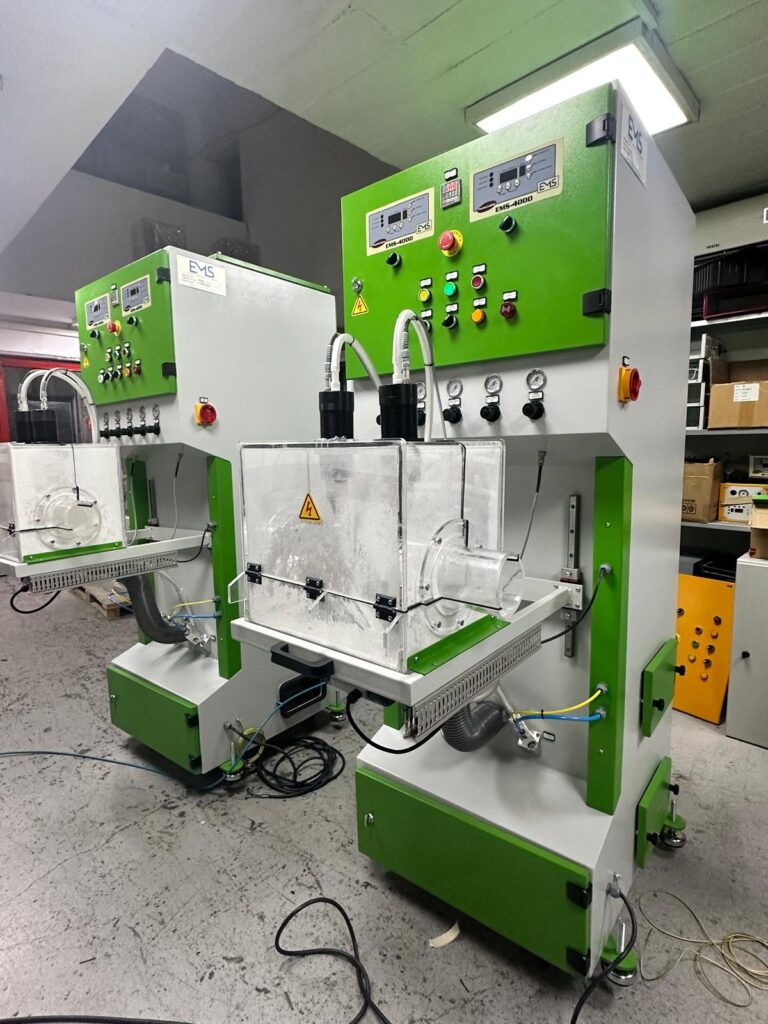
Powder coating is increasingly accepted as the preferred finishing process for many applications. Increasingly stringent environmental regulations, rising costs in all areas, and demands by consumers for better quality and more durable products are among the challenges facing today’s finishers. Powder coatings provide a solution to these challenges and others. Powder coating is the technique of applying dry paint to the component.
The powdered paint is normally applied by using a powder feed system and gun to electrostatically charge and spray the powder onto the part. For some applications, the part being coated is dipped into a fluidized bed of powder. The coated part is then heated in an oven, or via infrared panels, to melt and cure the paint.
During the curing process, a chemical cross-linking reaction is triggered and it is this chemical reaction that gives the powder coatings many of their desirable properties.
How a Cable Powder Talc Coating Machine Works
- Cable Preparation: The cable is prepared by cleaning and drying its surface. This ensures that the talcum powder can adhere properly to the cable.
- Talcum Powder Preparation: The talcum powder is prepared by blending it with a carrier agent, such as air or an inert gas. This helps to disperse the powder evenly and prevent it from clumping.
- Powder Application Chamber: The cable is fed into the powder application chamber. This chamber is typically electrostatic, which means that it has a positive or negative charge.
- Electrostatic Charging: The talcum powder is electrostatically charged by passing it through an ionization chamber. This gives the powder particles an opposite charge to the charge of the chamber.
- Powder Adhesion: As the cable passes through the electrostatic chamber, the charged powder particles are attracted to the oppositely charged cable surface. This causes the powder to adhere to the cable in a thin, even layer.
- Excess Powder Removal: After the cable is coated with powder, it is passed through a series of brushes or wipers to remove any excess powder. This ensures that only a thin layer of powder remains on the cable surface.
- Curing: The coated cable is then passed through a curing oven. This helps to dry and harden the powder coating, making it more durable and resistant to wear and tear.
- Inspection: The coated cable is inspected to ensure that it has been evenly coated with the correct thickness of powder. Any defects in the coating are identified and repaired.
- Packaging: The coated cable is then packaged and shipped to the customer.
Cable powder talc coating machines are a valuable tool for a variety of industries. They help to improve the performance, durability, and safety of cables.
A cable powder talc coating machine typically works as follows:
- The cable is fed into the machine through a series of guide rollers.
- The cable is then passed through a powder application chamber. In this chamber, the talcum powder is electrostatically charged and applied to the surface of the cable.
- The cable then passes through a curing oven. The heat from the oven helps to cure the talcum powder coating, making it more durable and resistant to wear and tear.
- The coated cable is then wound onto a reel or spool.
Benefits of Using a Cable Powder Talc Coating Machine
There are a number of benefits to using a cable powder talc coating machine, including:
- Increased durability: The talcum powder coating helps to protect the cable from wear and tear, extending its service life.
- Reduced friction: The talcum powder coating helps to reduce friction between the cable and its surroundings, making it easier to pull and move.
- Corrosion resistance: The talcum powder coating helps to protect the cable from moisture and corrosion, especially in harsh environments.
- Improved performance: The talcum powder coating helps to improve the performance of the cable by reducing friction and wear.
- Cost savings: The talcum powder coating can help to save money on cable replacement costs by extending the service life of the cable.
How to Choose a Cable Powder Talc Coating Machine
When choosing a cable powder talc coating machine, it is important to consider the following factors:
- The type of cable being coated: The type of cable being coated will determine the size and capacity of the coating machine required.
- The desired coating thickness: The desired coating thickness will determine the type of powder applicator and curing oven required.
- The production requirements: The production requirements will determine the speed and capacity of the coating machine required.
- The budget: Cable powder talc coating machines can range in price from a few thousand dollars to tens of thousands of dollars. It is important to set a budget before making a purchase.
Conclusion
Cable powder talc coating machines are a valuable tool for businesses that need to coat cables for durability, corrosion resistance, and improved performance. By choosing the right cable powder talc coating machine for your needs, you can save money on cable replacement costs and improve the performance of your equipment.
EMS Powder Coating Machinery manufactures different models of the electrostatic cable powder talc coating machine in cables to reduce the adherence of its cover and/or reduce the penetration and migration of water in power cables, optical fiber, coaxial and other cables.
To facilitate the use of the different applications of each sector and cable, each model can be configured with different numbers of powder guns, as well as with optional features such as flow control and bascule or fixed cable pass. The control modules allow adjusting all the important parameters of the process such as quantity, frequency of application, and electrostatic charge. This ensures a constant uniform coating of the talc during the entire production process.
Cable Powder Talc Coating Machine
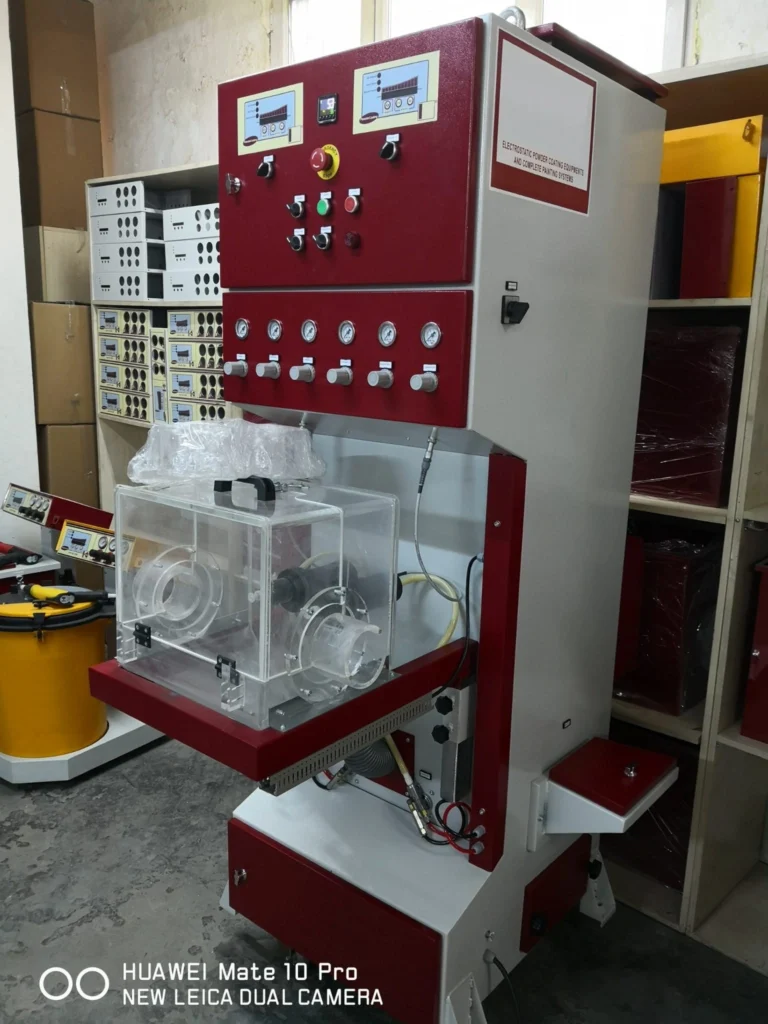
In the past, external powder refill containers were used for the automatic filling of the powder coating machines. The operator had to open a paper bag in order to carefully fill the powder into the refill container. Powder emissions and the associated contamination of the environment could not be avoided.
Their newly designed powder refill container has the following advantage. The operator simply places the closed paper bag in the refill container. A corresponding lance is inserted from the outside into the powder sack, through which the powder is automatically conveyed to the powder coating machine if required. There are no more powder emissions; the environment remains free of powder contamination.
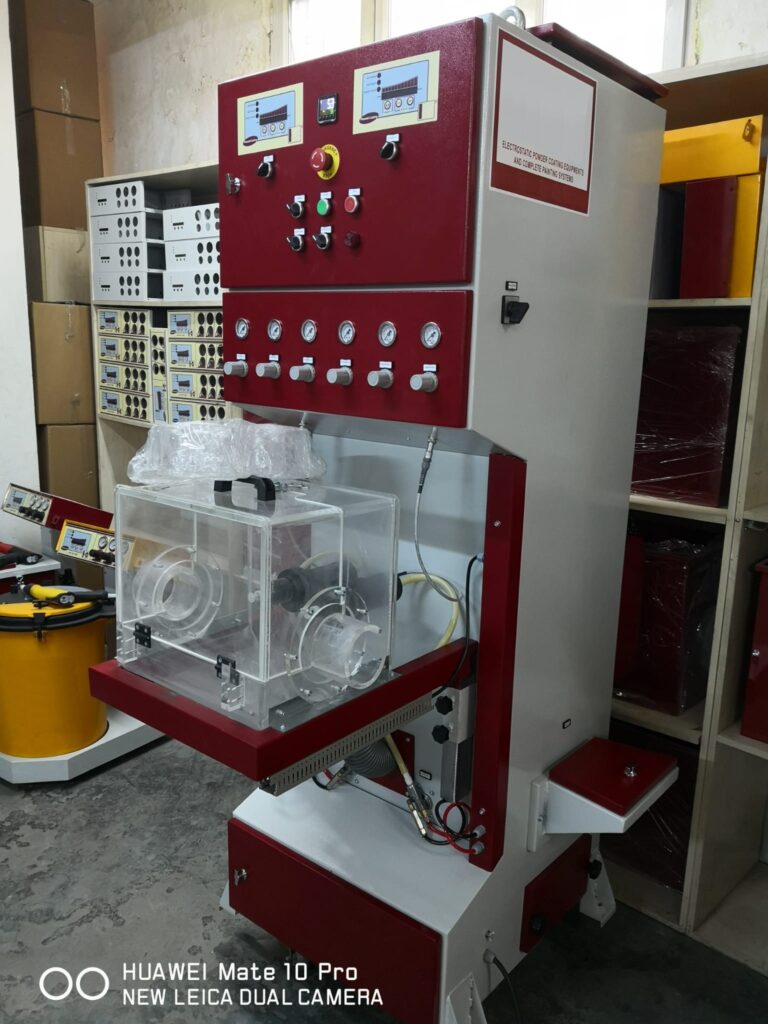
Cable Powder Coating Machine Applicator for Cables
An even powdering of your cable will be ensured by the electrostatic charging of the powder with up to 100 kV, even at very high production speeds of up to 1500 m/min. Our patented filter-cleaning system ensures a dust-free production area, contamination by escaping powder is a thing of the past. A robust, powder-coated machine frame (welded construction), manufactured in-house, is used as the base frame.
Many Individual Extensions As the production conditions vary from customer to customer, we adapt each powder coater to the individual needs of each customer. Possible options are e.g: Powder application control to ensure the quality of your product Individual adaptation of the coating chamber depending on the task Fast, tool-free height adjustment of the coating chamber for perfect adaptation to different product center heights Freestanding coating chamber separated from the basic powder coater in difficult space conditions.
Fine dosing for the application of minimal powder quantities on the product Separate refill container for automatic refilling of the powder coating machine directly from the powder bag Integration of the powder coating system into a higher-level line control system with all common industrial bus systems In connection with a polishing station also suitable for graphite
A Talc Applicator for Cable is an essential auxiliary unit in cable manufacturing lines, designed to apply a controlled and uniform layer of talcum powder onto the cable surface during or after extrusion. The primary purpose of talc application is to reduce surface tackiness, prevent adhesion between cable layers during coiling or winding, and improve handling in subsequent processes such as cutting, spooling, packing, or secondary extrusion. Talc also acts as a temporary dry lubricant, minimizing friction between the cable insulation and guiding components, conveyors, or take-up systems. This is particularly important for soft insulation materials such as PVC, rubber, XLPE, silicone, or elastomers, which may retain residual heat or surface stickiness immediately after extrusion.
Technically, a talc applicator typically consists of a sealed or semi-sealed housing equipped with a talc reservoir, dosing mechanism, and application chamber through which the cable passes. Depending on the design, talc distribution can be achieved using gravity feed, air-assisted dispersion, rotating brushes, vibrating trays, or pneumatic blowers that ensure even powder coverage around the entire cable circumference. Advanced systems allow precise adjustment of talc quantity to avoid excessive powder consumption while maintaining consistent surface treatment. Integrated filtration and recovery systems are often included to collect excess talc, reduce airborne dust, and maintain a clean working environment, which is critical for operator safety and compliance with industrial hygiene standards.
In modern cable production lines, talc applicators are engineered for seamless integration with extrusion lines, cooling troughs, caterpillars, and take-up units. They can be configured for single-core or multi-core cables and adapted to a wide range of diameters, from fine wires to large power cables and hoses. Stainless steel or powder-coated steel construction is commonly used to ensure durability and resistance to abrasion. Optional features such as quick-clean access, interchangeable cable guides, automated on/off control synchronized with line speed, and low-dust operation further enhance efficiency and reliability. Overall, a talc applicator for cable plays a key role in improving product quality, process stability, and downstream handling efficiency in cable and wire manufacturing environments.
In extended industrial practice, the talc applicator for cable is not merely a simple powdering device but a carefully engineered system that contributes directly to the stability and efficiency of the entire cable production line. During high-speed extrusion, insulation compounds emerge from the die at elevated temperatures and may retain surface softness for a significant length of the cooling path. Without proper surface treatment, cables can stick to rollers, belts, guides, or even to themselves when coiled, leading to surface defects, deformation, or production interruptions. The uniform application of talc creates a dry, non-adhesive interface that stabilizes the cable surface, allowing smooth and uninterrupted transport through downstream equipment while preserving dimensional accuracy and surface finish.
From a process engineering perspective, the correct dosage and homogeneity of talc application are critical. Excessive talc can cause unnecessary contamination of the production area, interfere with later processes such as printing, marking, or jacketing, and increase material consumption. Insufficient talc, on the other hand, may fail to eliminate surface tackiness, negating the benefits of the system. For this reason, modern talc applicators are designed with adjustable dosing controls and optimized airflow or mechanical dispersion principles that ensure repeatable results across different cable types and line speeds. In advanced configurations, talc flow can be regulated in relation to cable diameter, insulation material, and extrusion speed, allowing consistent performance even in variable production conditions.
The choice of talc itself also plays an important role in the effectiveness of the applicator. Industrial-grade talc used in cable manufacturing is typically characterized by fine particle size, controlled moisture content, and high purity to avoid abrasion, contamination, or adverse chemical interaction with insulation materials. Fine, dry talc ensures better adhesion to the cable surface and more uniform coverage, while minimizing dust generation. The applicator housing and internal components are therefore designed to handle fine powders efficiently, preventing clogging, bridging, or uneven flow over long production runs.
Another important aspect is workplace safety and environmental control. Talc, when dispersed into the air, can create dust that affects operator comfort and cleanliness if not properly managed. High-quality talc applicators incorporate dust containment features such as sealed chambers, negative pressure zones, integrated filters, and recovery systems that capture excess powder and return it to the reservoir for reuse. These measures not only improve working conditions but also reduce talc consumption and maintenance requirements. In many facilities, compliance with occupational health standards makes such dust-control features a decisive factor when selecting talc application equipment.
From a mechanical and operational standpoint, talc applicators are designed for robustness and ease of maintenance. Continuous cable production demands equipment that can operate reliably over long shifts with minimal downtime. Access panels for quick cleaning, removable guides, and wear-resistant internal surfaces help maintain consistent performance and reduce service intervals. Integration with the line’s control system allows synchronized start and stop functions, preventing unnecessary talc discharge during line stoppages and improving overall process control.
Ultimately, the talc applicator for cable is a small but strategically important component in modern wire and cable manufacturing. Its contribution extends beyond surface treatment alone, influencing product quality, line efficiency, operator safety, and cost control. When properly selected, configured, and maintained, a talc applicator ensures smooth cable handling, protects insulation integrity, and supports stable, high-throughput production across a wide range of cable types and industrial applications.
In high-capacity cable plants, the role of the talc applicator becomes even more pronounced as production speeds increase and product tolerances become tighter. As extrusion lines operate continuously over long periods, even minor surface adhesion or friction issues can accumulate into significant operational problems, such as unstable pulling forces, irregular winding tension, or surface marking. A consistently applied talc layer helps to equalize friction along the entire cable path, allowing caterpillars, capstans, and take-up systems to operate smoothly and predictably. This contributes to stable line speed, improved dimensional consistency, and reduced mechanical stress on both the cable and the downstream equipment.
The adaptability of talc applicators to different cable constructions is another critical factor in modern manufacturing environments. Cable producers often switch between various insulation materials, wall thicknesses, and diameters within the same production line. A well-designed talc applicator can be quickly adjusted to accommodate these changes without extensive downtime. Adjustable entry and exit guides, interchangeable inserts, and variable dosing settings allow operators to fine-tune the application process for each product type. This flexibility is particularly valuable in facilities that produce a wide range of power cables, control cables, automotive wires, or specialty industrial cables in small and medium batch sizes.
In addition to single-layer insulation lines, talc applicators are frequently used in multi-stage cable production processes. During secondary extrusion or jacketing operations, previously insulated cores may again exhibit surface friction or adhesion when bundled or guided through complex tooling. Applying talc at intermediate stages helps maintain separation between individual cores, prevents sticking during stranding or laying-up, and ensures uniform positioning within the outer jacket. In these applications, the talc applicator supports not only surface conditioning but also the geometric stability of the entire cable structure.
Automation and digitalization trends in the cable industry have also influenced the design and integration of talc application systems. In advanced production lines, talc applicators can be linked to centralized control systems, enabling real-time monitoring of operating parameters such as airflow, powder consumption, and filter status. Alarm functions can notify operators of low talc levels, abnormal pressure conditions, or maintenance requirements, reducing the risk of unplanned stoppages. Such integration aligns the talc applicator with Industry 4.0 principles, making it a smart and responsive component rather than a passive auxiliary device.
From a quality assurance perspective, consistent talc application contributes to downstream inspection and finishing processes. A stable, non-tacky surface allows for accurate printing, marking, and measuring, as well as reliable non-contact inspection methods such as laser diameter control or surface vision systems. Variations in surface friction or contamination can affect these measurements, so a properly functioning talc applicator indirectly supports quality control and traceability requirements. In this sense, talc application is closely linked to the overall consistency and professionalism of the production process.
Over the long term, investment in a high-quality talc applicator can yield measurable economic benefits. Reduced scrap rates, fewer line stoppages, lower maintenance costs, and improved working conditions all contribute to a favorable return on investment. While the talc applicator may represent a relatively small portion of the total extrusion line cost, its impact on operational stability and product quality is significant. For cable manufacturers aiming to achieve high productivity, consistent quality, and reliable process control, the talc applicator remains an indispensable element of a well-engineered cable production line.
Beyond standard extrusion and jacketing lines, talc applicators also play an important role in specialized cable manufacturing processes where material behavior is particularly sensitive to surface conditions. In the production of rubber-insulated cables, silicone cables, or high-flexibility compounds, surface tackiness can persist even after extended cooling. In such cases, talc application is not only a convenience but a functional necessity to ensure that cables can be guided, coiled, or layered without deformation or damage. The talc layer acts as a temporary barrier that stabilizes the surface until the material fully cures or reaches its final mechanical properties.
The design of the talc applicator housing is therefore optimized to ensure full circumferential coverage, even at high line speeds or with complex cable paths. Internal flow channels, deflectors, or rotating elements are arranged to distribute talc evenly around the cable without creating localized buildup. For large-diameter cables or hoses, extended application chambers may be used to increase residence time and improve coverage uniformity. For fine wires or multi-core constructions, compact applicators with precise guides prevent excessive talc accumulation while maintaining effective separation between individual conductors.
Maintenance considerations are another decisive aspect in the long-term operation of talc application systems. Talc, by nature, is a fine mineral powder that can accumulate on internal surfaces if not properly managed. High-quality applicators are therefore designed with smooth internal geometries, anti-static materials, and easy-access covers to simplify cleaning and inspection. Filters and recovery systems are sized to operate efficiently over long intervals, and wear parts are selected for resistance to abrasion. These features reduce the frequency and duration of maintenance interventions, which is essential in continuous production environments where downtime directly affects output and delivery schedules.
In terms of integration, talc applicators are often positioned immediately after the cooling trough or drying section, where the cable surface is free of moisture but still warm. This placement ensures optimal adhesion of talc particles and prevents clumping or uneven distribution caused by residual water. In some lines, additional air knives or wiping units are installed before the talc applicator to remove surface moisture and stabilize the cable trajectory. The precise positioning and alignment of the applicator within the line layout can therefore have a significant influence on its effectiveness and overall process stability.
As sustainability and material efficiency become increasingly important in the cable industry, talc applicators are also evolving to minimize waste and environmental impact. Closed-loop powder recovery systems, low-dust operation, and optimized dosing help reduce talc consumption and limit airborne particles. In some applications, alternative surface treatments or combined systems are used to further enhance efficiency, but talc remains widely preferred due to its low cost, chemical neutrality, and proven performance across a broad range of insulation materials.
In summary, the talc applicator for cable is a highly specialized yet indispensable component that supports reliable, high-quality cable production under demanding industrial conditions. Its influence extends from surface conditioning and handling stability to quality control, maintenance efficiency, and workplace safety. As cable designs become more diverse and production requirements more demanding, the continued development and optimization of talc application systems will remain an important factor in achieving consistent performance and competitive manufacturing operations.
Looking further into long-term operational strategy, the talc applicator also contributes to process repeatability and standardization across different production lines and manufacturing sites. When cable producers operate multiple extrusion lines or facilities, consistent surface treatment becomes essential for maintaining uniform product behavior regardless of where or when the cable is produced. A properly specified talc applicator, configured with standardized settings and procedures, helps ensure that cables exhibit the same handling characteristics, coiling behavior, and surface feel across batches. This level of consistency is especially important for OEM customers and large infrastructure projects, where uniform performance and appearance are critical acceptance criteria.
In export-oriented cable manufacturing, surface condition also affects packaging, storage, and transportation. Cables treated with an appropriate amount of talc are less likely to stick together or deform during long-term storage on drums or coils, particularly in warm climates or enclosed shipping containers. The talc layer reduces surface friction between adjacent turns of cable, helping maintain coil geometry and preventing insulation damage during transport. As a result, talc application indirectly protects product quality beyond the factory floor, reducing the risk of customer complaints or returns related to handling or surface defects.
The talc applicator’s influence can also be seen in downstream processing steps such as cutting, stripping, and termination. A stable, dry cable surface improves feeding accuracy in cutting machines and reduces slippage in measuring systems. In automated stripping or assembly lines, predictable surface friction allows grippers and guides to operate more reliably, improving cycle times and reducing misfeeds. Although the talc layer is temporary and minimal, its effect on mechanical interaction with equipment can significantly enhance overall process efficiency in high-volume production environments.
From an engineering and purchasing perspective, selecting the right talc applicator involves balancing performance, flexibility, and lifecycle cost. Factors such as maximum line speed, cable diameter range, dust control requirements, and ease of integration must be carefully evaluated. While basic applicators may suffice for low-speed or limited applications, more advanced systems offer tangible advantages in demanding production scenarios. Over time, improved reliability, reduced maintenance, and lower talc consumption can outweigh the initial investment, making a well-designed applicator a cost-effective choice for modern cable plants.
As cable materials and insulation compounds continue to evolve, talc applicators are also adapted to meet new requirements. New polymer formulations, higher operating temperatures, and stricter cleanliness standards require precise control of surface treatment processes. Manufacturers respond by refining airflow management, sealing concepts, and dosing accuracy, ensuring that talc application remains compatible with future cable designs. In this context, the talc applicator is not a static accessory but an evolving part of the production line, continuously optimized to support new technologies and market demands.
Ultimately, the sustained relevance of the talc applicator for cable lies in its ability to address a fundamental challenge in cable manufacturing: controlling surface behavior in a fast, continuous process. By ensuring smooth handling, protecting insulation integrity, and supporting consistent quality from extrusion to delivery, the talc applicator remains a quiet but essential contributor to efficient, high-performance cable production.
Cable Powder Talc Coating Machine
A Cable Powder Talc Coating Machine—also known as a Talc Powder Applicator for Cable—is a specialized industrial system used in wire and cable manufacturing to apply a controlled, uniform layer of talcum powder onto the surface of cables during production. This machine plays a vital role in improving surface conditions, reducing stickiness, preventing adhesion between cable layers, and enhancing handling throughout the downstream processing stages. Its design and functionality are tailored to meet the demanding requirements of continuous, high-speed cable extrusion lines producing everything from fine wires and multi-core cables to large power cables and hoses.
Function and Purpose
The primary purpose of a cable talc coating machine is to apply talcum powder evenly around the circumference of an extruded cable as it exits the cooling section of the production line. Talcum powder (or “talc”) acts as a dry lubricant and anti-stick agent that significantly improves the handling characteristics of newly extruded cable surfaces. Immediately after extrusion, insulating materials such as PVC, XLPE, rubber, or silicone can remain tacky or soft for a short distance along the line. Without talc treatment, the cable may adhere to guides, rollers, caterpillars, conveyors, or even itself when wound onto reels or drums. Talc prevents this by creating a thin, dry interfacial layer that allows the cable to slide smoothly against machine components and adjacent turns of cable on coils.
Core Components and Operation
A typical cable powder talc coating machine consists of several key components:
- Talc Reservoir and Hopper: Holds the powder supply, often designed to minimize dust escape and facilitate easy refilling.
- Dosing & Dispersion System: Precisely controls the amount of powder released and distributes it uniformly around the cable. Methods include gravity feed, pneumatic dispersion, air knives, or vibratory trays.
- Application Chamber: A contained space through which the cable passes, ensuring talc adheres evenly without significant blow-off or loss.
- Guiding Mechanism: Adjustable entry and exit guides help center the cable within the applicator and ensure full circumferential coverage.
- Dust Control & Recovery: Filters and suction systems capture excess powder, improving workplace cleanliness and recovering talc for reuse.
- Control Interface: Operator controls or PLC integration allow adjustments based on cable diameter, line speed, and insulation type.
The machine is strategically positioned just after the cooling trough or dryer—once the cable surface is free from moisture but still warm enough for talc particles to adhere uniformly.
Why Talc Coating Matters
1. Enhanced Production Efficiency:
Even talc application reduces line stoppages caused by friction, sticking, or tension fluctuations. This leads to smoother production with fewer rejects or adjustments, especially at high line speeds.
2. Improved Handling & Quality:
A well-coated cable surface eases handling during pulling, coiling, spooling, stacking, and packaging. It also supports accurate downstream processes like marking, printing, cutting, and stripping.
3. Protection in Storage & Transport:
Cables treated with talc are less likely to stick, deform, or accumulate surface marks when wound on drums and stacked in storage or shipment, preserving product quality until delivery.
4. Customization & Flexibility:
Modern talc coating machines can be quickly reconfigured for different cable diameters, material types, and production speeds, making them suitable for versatile manufacturing lines.
Industrial Integration and Control
In modern cable plants, talc coating machines are often fully integrated into line automation systems. Through PLC or SCADA connectivity, the machine can:
- Adjust talc feed based on line speed and cable size.
- Monitor talc level and dosing accuracy.
- Trigger alarms for maintenance, low powder, or filter saturation.
- Synchronize operation with start/stop of extrusion or take-up equipment.
This level of automation improves efficiency and reduces operator dependency, aligning the coating machine with Industry 4.0 principles.
Design Considerations and Best Practices
When selecting or specifying a cable powder talc coating machine, engineers and production managers typically consider:
- Cable Diameter Range: Machines should support the full range of cable sizes produced without major mechanical changeover.
- Line Speed Capacity: High-speed lines require precise dispersion control to avoid over- or under-coating.
- Dust Control Efficiency: Effective filtration is essential for occupational safety and minimized talc consumption.
- Ease of Maintenance: Quick-access parts, smooth internal surfaces, and wear-resistant components reduce service time.
- Material Compatibility: Talc quality and particle size should align with insulation compounds to ensure adhesion without abrasion.
Economic and Operational Impact
Although a talc coating machine may represent a modest portion of the total extrusion line cost, its impact on production reliability and product quality is significant. Benefits include:
- Reduced Scrap and Rework
- Lower Maintenance Downtime
- Better Handling and Packing Efficiency
- Cleaner Working Environment
- Improved Product Consistency Across Batches
Over time, these improvements contribute to a high return on investment (ROI), particularly in continuous production environments with demanding quality standards.
Conclusion
The Cable Powder Talc Coating Machine is a critical auxiliary component in cable manufacturing, ensuring smooth production, superior handling, minimal surface issues, and stable downstream processing. Its controlled application of talc enhances surface properties, protects insulation integrity, supports automation, and contributes to consistent product quality from extrusion to shipment. When properly specified and integrated, this machine not only optimizes production lines but also strengthens operational efficiency and competitiveness in today’s demanding cable industry.
In large-scale and technologically advanced cable manufacturing environments, the Cable Powder Talc Coating Machine gradually reveals its importance not just as an auxiliary unit, but as a stabilizing element that harmonizes multiple stages of production into a single, reliable workflow. As extrusion speeds increase and cable constructions become more complex, the margin for surface-related disturbances narrows significantly. Even small variations in friction or surface condition can propagate downstream, influencing pulling force stability, winding precision, and final coil geometry. The talc coating machine mitigates these risks by creating a predictable and uniform surface state, effectively decoupling the cable’s thermal and material behavior from the mechanical demands of the line.
From a materials science perspective, the interaction between talc particles and polymer insulation surfaces is particularly advantageous. Talc’s lamellar crystalline structure allows particles to slide easily over one another, producing a lubricating effect without chemical interaction. This makes talc suitable for a wide variety of insulation compounds, including PVC, PE, XLPE, EPR, rubber, silicone, and thermoplastic elastomers. Because talc is chemically inert and thermally stable under typical cable production conditions, it does not react with the insulation or migrate into the polymer matrix. Instead, it remains as a superficial layer that performs its function during handling and then gradually dissipates or is removed in later stages such as installation or commissioning.
In continuous production, thermal gradients along the cable line can be substantial. The cable exits the extrusion die at high temperature, passes through cooling troughs, and then gradually equilibrates to ambient conditions. During this transition, surface properties evolve continuously. The talc coating machine is positioned at a critical point in this thermal profile, where the surface is sufficiently dry but still warm enough to promote adhesion of fine powder particles. This timing ensures that talc adheres evenly and remains effective throughout the remainder of the process. Poor positioning or inadequate drying upstream can result in uneven coating, clumping, or ineffective surface treatment, underscoring the importance of holistic line design.
As production lines diversify, cable manufacturers increasingly require equipment that can handle frequent product changeovers without compromising efficiency. The talc coating machine contributes to this flexibility by accommodating a broad range of cable diameters and constructions. Adjustable guides, modular inserts, and variable dosing systems allow rapid adaptation to new products with minimal mechanical intervention. In modern designs, these adjustments can often be made tool-free, reducing setup time and operator dependency. This adaptability is particularly valuable in plants producing customized cables, short runs, or multiple product families on shared lines.
The role of the talc coating machine becomes even more pronounced in multi-core cable manufacturing. When several insulated conductors are brought together for laying-up or stranding, surface friction between cores can affect geometry, pitch stability, and overall cable symmetry. Talc application reduces inter-core friction, allowing the conductors to align naturally under controlled tension. This results in more consistent core positioning and a more uniform final cable structure. In subsequent jacketing operations, this stability translates into more uniform wall thickness and improved concentricity, directly influencing electrical and mechanical performance.
Dust management is a critical engineering challenge in talc coating systems. While talc is highly effective, uncontrolled dispersion can lead to airborne particles that affect cleanliness, equipment longevity, and operator comfort. Modern cable powder talc coating machines address this challenge through enclosed application chambers, controlled airflow paths, and integrated filtration systems. Negative pressure zones prevent powder escape, while high-efficiency filters capture fine particles for reuse or disposal. These features not only improve workplace conditions but also ensure that talc is applied where it is needed, reducing waste and improving consistency.
In high-speed extrusion lines, synchronization between the talc coating machine and upstream and downstream equipment is essential. Sudden changes in line speed, start-stop cycles, or emergency stops can disrupt powder application if the system is not properly coordinated. Advanced machines incorporate sensors and control logic that adjust talc flow dynamically based on line speed and cable movement. When the line stops, talc flow is immediately reduced or halted, preventing localized buildup or contamination. This level of responsiveness ensures that talc application remains consistent even under non-ideal operating conditions.
Maintenance strategy is another area where the talc coating machine contributes to overall plant efficiency. Because talc is abrasive at a microscopic level, prolonged exposure can wear internal surfaces if materials are not properly selected. High-quality machines use wear-resistant coatings, stainless steel components, and smooth internal geometries to minimize accumulation and abrasion. Access panels and modular assemblies simplify cleaning and inspection, allowing maintenance tasks to be completed quickly during planned downtime. This design philosophy supports long service life and predictable maintenance intervals, which are essential in continuous production environments.
From a quality assurance standpoint, the indirect benefits of talc coating are substantial. A stable, non-tacky surface enables accurate non-contact measurements such as laser diameter control, ovality measurement, and surface inspection. Variations in surface friction or contamination can distort readings or cause measurement instability. By standardizing surface conditions, the talc coating machine supports reliable data acquisition and process control. This, in turn, facilitates tighter tolerances, better traceability, and more effective statistical process control across production batches.
In logistics and post-production handling, the advantages of talc coating extend well beyond the extrusion hall. Coiled or drummed cables treated with talc are less prone to sticking, flattening, or surface marking during storage. This is especially important for cables shipped to regions with high ambient temperatures, where insulation materials may soften slightly during transit. The talc layer acts as a protective interface between adjacent turns, preserving coil integrity and easing unwinding at the customer’s site. These benefits reduce the risk of installation issues and enhance customer satisfaction.
Economically, the talc coating machine represents a classic example of a small investment delivering disproportionate value. While its cost is modest compared to extruders, cooling systems, or take-up units, its influence on uptime, scrap reduction, and quality consistency is significant. By preventing surface-related defects and handling issues, the machine reduces waste and rework, improves yield, and stabilizes production schedules. Over the lifetime of a production line, these savings often exceed the initial investment many times over.
As sustainability considerations gain prominence in industrial manufacturing, talc coating machines are also evolving to align with environmental goals. Efficient powder recovery systems reduce raw material consumption, while sealed designs minimize emissions and housekeeping requirements. In some cases, manufacturers explore optimized talc grades or hybrid systems that combine talc with other surface treatments to further reduce usage. These developments reflect a broader trend toward resource efficiency and responsible manufacturing without compromising performance.
Looking ahead, the future of cable powder talc coating machines is closely linked to broader trends in automation, digitalization, and smart manufacturing. Integration with plant-wide control systems allows real-time monitoring of powder consumption, airflow, filter condition, and operational status. Predictive maintenance algorithms can use this data to anticipate service needs, reducing unplanned downtime. In highly automated plants, the talc coating machine becomes an intelligent node within the production network, contributing data and stability to the overall process.
In conclusion, the Cable Powder Talc Coating Machine is far more than a simple powder applicator. It is a critical process stabilizer that influences material behavior, mechanical interaction, quality control, logistics, and economics throughout the cable manufacturing lifecycle. By ensuring consistent surface conditions, reducing friction-related disturbances, and supporting efficient downstream processing, it enables modern cable plants to operate at high speed, high quality, and high reliability. As cable designs, materials, and production demands continue to evolve, the talc coating machine will remain an essential and continuously refined element of advanced cable manufacturing systems.
When examined from the perspective of long-term production strategy, the Cable Powder Talc Coating Machine also plays a decisive role in enabling scalable growth and repeatable manufacturing performance. As cable producers expand capacity, add parallel extrusion lines, or replicate production setups in different facilities, the ability to reproduce identical process conditions becomes a competitive advantage. Standardized talc coating systems, configured with well-defined operating parameters, help ensure that surface behavior remains consistent regardless of line location or production volume. This consistency simplifies process validation, operator training, and quality auditing, particularly in plants that supply regulated markets such as energy, transportation, or industrial automation.
The influence of talc coating is especially evident in high-performance and specialty cable applications. In the production of fire-resistant cables, halogen-free compounds, or highly filled polymer formulations, surface behavior can be more unpredictable than with standard materials. These compounds may exhibit higher friction, delayed curing, or increased sensitivity to temperature fluctuations. In such cases, the talc coating machine provides an additional layer of process security, compensating for material variability and stabilizing handling characteristics. This allows manufacturers to process challenging materials at industrial speeds without compromising surface quality or mechanical integrity.
In multi-step production lines, talc coating often serves as a preparatory process for subsequent operations. For example, during intermediate storage between insulation and jacketing stages, talc-coated cables are less prone to blocking or sticking, even when stored in coils for extended periods. This flexibility in production scheduling allows manufacturers to decouple processes, optimize equipment utilization, and respond more effectively to fluctuating demand. In plants operating around the clock, such decoupling can significantly improve overall equipment effectiveness and reduce bottlenecks.
Another often overlooked benefit of cable powder talc coating machines is their contribution to equipment longevity. By reducing friction between the cable and mechanical components, talc coating decreases wear on guides, rollers, belts, and caterpillar pads. Over time, this reduction in mechanical stress translates into longer service intervals, fewer replacement parts, and more stable pulling forces. In high-speed lines, where even small increases in friction can accelerate wear, this protective effect has measurable economic value and contributes to smoother, quieter operation.
From the operator’s point of view, a well-designed talc coating machine enhances usability and safety. Clear visibility of the application chamber, intuitive controls, and easy access for cleaning reduce the likelihood of operator error. Modern machines are often designed with ergonomic considerations in mind, minimizing manual handling of powder and reducing exposure to dust. Automated refilling systems or sealed powder containers further improve safety and cleanliness, aligning with modern workplace standards and reducing the physical burden on operating personnel.
The integration of talc coating machines into digital production environments also opens new possibilities for process optimization. By tracking talc consumption in relation to production output, manufacturers can identify opportunities for further efficiency gains. Data analytics can reveal correlations between talc usage, line speed, material type, and quality outcomes, enabling fine-tuning of application parameters. Over time, such data-driven optimization leads to more stable processes, reduced variability, and lower operating costs.
In global markets, where cable manufacturers must meet diverse customer requirements and international standards, the ability to deliver consistent surface quality is a key differentiator. Talc coating contributes to a uniform surface appearance and handling behavior that customers perceive as quality and reliability. Whether the cable is destined for automated assembly lines, harsh industrial environments, or complex installation scenarios, predictable surface behavior simplifies handling and installation, enhancing the end-user experience.
From a system design perspective, the cable powder talc coating machine exemplifies how targeted process interventions can yield broad benefits. Rather than addressing friction, sticking, and handling issues individually at multiple points along the line, talc coating provides a centralized solution that influences the entire downstream process. This holistic effect is one reason why talc applicators remain a standard feature in cable extrusion lines worldwide, despite continuous advances in materials and processing technology.
In the broader context of cable manufacturing evolution, the talc coating machine represents a balance between simplicity and sophistication. Its basic principle—applying a fine mineral powder to improve surface behavior—is straightforward and time-tested. Yet its modern implementations incorporate advanced engineering, automation, and environmental controls that reflect contemporary manufacturing priorities. This combination of proven functionality and continuous refinement ensures that talc coating remains relevant even as production technologies evolve.
Ultimately, the sustained use of cable powder talc coating machines underscores a fundamental reality of industrial production: controlling small details at the right point in the process can have far-reaching effects. By stabilizing the cable surface at a critical moment, the talc coating machine supports efficiency, quality, and reliability across the entire value chain, from raw material processing to final installation. In doing so, it continues to justify its place as an indispensable component of modern cable manufacturing systems.
At an even broader operational level, the Cable Powder Talc Coating Machine can be viewed as a process equalizer that absorbs variability inherent in industrial manufacturing. Raw material batches may differ slightly in formulation, ambient conditions may fluctuate with seasons, and production schedules may impose frequent changes in speed or product type. While each of these factors can influence surface behavior, the talc coating step introduces a controlled and repeatable surface condition that buffers the downstream process from such variations. This buffering effect is particularly valuable in large plants where multiple variables interact simultaneously and absolute control of every upstream parameter is neither practical nor economical.
In cable lines designed for very high output, sometimes exceeding hundreds of meters per minute, mechanical stability becomes as critical as material behavior. At these speeds, even minimal surface adhesion can translate into oscillations, uneven tension, or micro-slippage that affects winding quality and dimensional consistency. Talc coating reduces the coefficient of friction in a predictable manner, enabling stable traction control in caterpillars and capstans. This stability allows manufacturers to push line speeds closer to the technical limits of extrusion and cooling equipment without sacrificing quality, thereby maximizing productivity from existing assets.
The role of talc coating is also significant in the context of precision cable applications. In instrumentation cables, data cables, and specialty control cables, dimensional accuracy and surface integrity are tightly controlled. Minor surface defects or handling marks can compromise performance or appearance. A well-regulated talc coating process minimizes contact stress between the cable and machine components, reducing the risk of surface abrasion or indentation. In these applications, talc coating supports not only mechanical handling but also the aesthetic and functional requirements of high-value products.
When considering plant layout and space utilization, the talc coating machine offers a compact solution to a complex problem. Instead of extending cooling sections or adding multiple auxiliary devices to manage surface tackiness, a single, well-positioned talc applicator can address these challenges within a relatively small footprint. This efficiency in space usage is particularly advantageous in retrofit projects or brownfield facilities, where available floor space is limited and major layout changes are costly. By delivering a high impact within a compact module, the talc coating machine fits seamlessly into both new and existing production lines.
The global nature of cable manufacturing further amplifies the importance of talc coating systems. Plants operating in different climatic regions face varying ambient temperatures and humidity levels, which directly affect polymer cooling and surface behavior. In tropical or hot environments, insulation materials may remain tacky for longer periods, increasing the risk of sticking and deformation. Talc coating provides a consistent countermeasure that reduces dependence on ambient conditions, enabling stable production quality across diverse geographic locations.
From a training and knowledge transfer perspective, the talc coating machine simplifies standard operating procedures. Rather than requiring operators to constantly adjust multiple parameters to manage surface behavior, talc coating establishes a baseline condition that is easy to understand and control. Clear guidelines for talc dosage, airflow, and maintenance can be documented and replicated, reducing reliance on individual operator experience. This standardization is particularly valuable in large organizations with high staff turnover or multiple shifts.
In terms of future development, cable powder talc coating machines are likely to incorporate even more advanced sensing and control capabilities. Inline sensors could monitor powder density, airflow velocity, or coating uniformity in real time, enabling closed-loop control of the application process. Such developments would further enhance consistency and reduce manual intervention. As digital twins and simulation tools become more common in manufacturing, talc coating processes could be modeled and optimized virtually, accelerating commissioning and process tuning.
Despite ongoing innovation, the fundamental appeal of talc coating remains its simplicity, reliability, and effectiveness. Few other interventions deliver such a broad range of benefits with minimal complexity and low operating cost. This is why talc coating machines have remained a staple of cable production for decades, adapting to new materials and technologies while preserving their core function.
In closing, the Cable Powder Talc Coating Machine exemplifies how a focused, well-engineered solution can exert influence far beyond its immediate function. By controlling surface behavior at a critical juncture, it enhances mechanical stability, protects product quality, supports automation, and enables scalable, efficient manufacturing. Its continued evolution reflects the cable industry’s commitment to refining every aspect of the production process, ensuring that even the smallest details contribute to overall excellence and competitiveness.
Powder and Talc Coating Machine for Cable
High Precision Powder Feeding System
The powder feeding system is one of the most important components of any cable powder coating machine because it directly determines coating consistency, powder consumption, and overall production efficiency. An unstable feeding system can lead to fluctuations in powder density, causing certain sections of the cable to receive too much powder while others receive too little. Such inconsistencies not only increase operating costs but can also reduce the quality of the finished cable.
The EMS Powder and Talc Coating Machine incorporates a highly accurate powder feeding system that has been developed for continuous industrial operation. Powder is transferred from the storage hopper into the coating chamber through a carefully controlled delivery mechanism that maintains a stable flow regardless of production speed or operating duration. This ensures that the amount of powder surrounding the cable remains constant throughout the entire production process.
The feeding system can be adjusted to match different cable diameters, insulation materials, and line speeds. Whether the production line is manufacturing small communication wires or large power cables, operators can precisely regulate the amount of powder applied to achieve the desired coating thickness while minimizing unnecessary consumption. The machine responds quickly to production changes, allowing manufacturers to switch between different cable products without lengthy setup procedures.
An additional advantage of the EMS feeding system is its ability to prevent powder bridging inside the hopper. Fine powders often tend to compact or form bridges that interrupt material flow, leading to inconsistent coating and production downtime. EMS addresses this issue through specially designed hopper geometry and powder agitation mechanisms that keep the powder flowing smoothly even during long production shifts.
By maintaining a continuous and predictable powder supply, the EMS feeding system helps manufacturers improve cable quality, reduce powder waste, decrease operator intervention, and increase overall production reliability.
Suitable for All Cable Types
Cable manufacturers produce an enormous variety of products, each with different diameters, insulation materials, production speeds, and customer specifications. For this reason, a powder coating machine must be sufficiently versatile to handle a wide range of cable designs without compromising coating quality. The EMS Powder and Talc Coating Machine has been engineered to provide exceptional flexibility, making it suitable for nearly every type of insulated cable manufactured today.
Power cable manufacturers benefit from the machine’s ability to coat both low-voltage and high-voltage cables with uniform precision. Large-diameter cables require consistent powder application over substantial surface areas, while smaller electrical wires demand extremely accurate powder control to avoid excessive coating. EMS equipment performs equally well across this entire production range.
Communication cable manufacturers also rely on stable powder application to protect delicate insulation layers during winding and packaging. Whether producing LAN cables, coaxial cables, telephone cables, signal cables, or data transmission cables, the EMS system ensures smooth cable handling throughout the manufacturing process.
The machine is equally effective for fiber optic cable production, where maintaining clean and consistent cable surfaces is particularly important. Automotive cable manufacturers appreciate the machine’s ability to process numerous cable sizes used in modern vehicle wiring systems while maintaining high production speeds and repeatable coating quality.
Specialized industries such as mining, marine, aerospace, railway, renewable energy, oil and gas, robotics, medical equipment, and industrial automation all manufacture cables with unique insulation materials and construction methods. The flexibility of the EMS powder coating system allows manufacturers in these industries to optimize powder application for their specific products without requiring extensive machine modifications.
This versatility makes the EMS Powder and Talc Coating Machine an excellent long-term investment for manufacturers producing multiple cable types or planning future product expansion.
Compatible Insulation Materials
Modern cable manufacturing utilizes a wide range of insulation compounds, each possessing unique mechanical and chemical properties. Some materials exhibit greater surface tackiness than others, while certain specialty compounds require particularly careful handling during production. The EMS Powder and Talc Coating Machine has been designed to operate effectively with virtually all commonly used cable insulation materials.
PVC remains one of the world’s most widely used insulation materials due to its excellent electrical properties, flexibility, and cost-effectiveness. During high-speed extrusion, PVC insulation often benefits significantly from uniform talc coating that prevents sticking during winding and storage.
Cross-linked polyethylene (XLPE), commonly used in medium- and high-voltage power cables, requires reliable surface protection throughout the manufacturing process. EMS powder coating systems help preserve the integrity of XLPE insulation while improving handling characteristics during downstream processing.
Polyethylene materials such as HDPE and LDPE are extensively used in communication cables, fiber optic cables, and specialty industrial wiring. Their smooth surfaces can benefit from carefully controlled powder application that reduces friction without affecting cable appearance or performance.
Rubber-insulated cables, silicone cables, TPU cables, TPE cables, EVA-insulated products, and halogen-free flame-retardant compounds (HFFR/LSZH) each present their own production challenges. The adjustable powder delivery system incorporated into the EMS machine allows manufacturers to optimize coating parameters for every insulation material while maintaining consistent product quality.
As new insulation technologies continue to emerge, the flexibility of EMS powder coating equipment ensures compatibility with future cable materials, protecting manufacturers’ investments for many years of operation.
Powder Types Supported
Different cable manufacturers often prefer different coating materials depending on their products, production methods, customer requirements, and local industry standards. The EMS Powder and Talc Coating Machine has been developed to accommodate a broad selection of industrial coating powders, providing manufacturers with maximum flexibility.
Talcum powder remains the most widely used coating material due to its excellent lubricating properties, fine particle size, chemical stability, and economical cost. It effectively reduces cable surface friction while providing outstanding winding performance.
Industrial-grade talc formulations specifically designed for cable manufacturing offer improved flow characteristics and controlled particle distributions that maximize coating consistency. EMS machines are optimized to handle these powders efficiently while minimizing airborne dust and product waste.
In addition to talc, the system can process magnesium silicate powders, calcium carbonate, anti-blocking powders, specialty mineral blends, and customized industrial formulations developed for specific cable applications. Certain manufacturers also employ polymer-based lubricating powders that require careful handling and precise dosing. The EMS feeding and distribution systems provide the necessary control to process these specialized materials successfully.
Because powder characteristics vary considerably in terms of particle size, density, moisture absorption, and flow behavior, EMS machines feature adjustable operating parameters that enable operators to optimize machine performance for each powder type. This flexibility allows manufacturers to experiment with different coating materials while maintaining stable production conditions.
The ability to process multiple powder formulations ensures that EMS equipment remains suitable for changing production requirements, evolving industry standards, and future product development.
Adjustable Powder Coating Thickness
Not every cable requires the same quantity of surface powder. Thin communication wires generally require only a very light coating, whereas large-diameter industrial power cables may benefit from a somewhat heavier application. Applying excessive powder increases operating costs and creates unnecessary dust, while insufficient powder may fail to prevent cable sticking.
The EMS Powder and Talc Coating Machine gives operators complete control over coating thickness through easily adjustable powder delivery settings. Multiple operating parameters—including powder feed rate, airflow, chamber pressure, and recovery balance—can be fine-tuned to achieve the ideal coating level for every cable product.
This adjustability is especially valuable for manufacturers producing a wide variety of cable diameters on the same production line. Recipes can be established for frequently manufactured products, allowing rapid changeovers with minimal operator intervention. Production personnel simply select the appropriate operating parameters, and the machine quickly stabilizes at the desired coating conditions.
Consistent coating thickness also contributes to improved product appearance. Uniform powder application produces cables with clean, professional surfaces that meet customer expectations while avoiding the excessive powder accumulation sometimes observed with less sophisticated coating systems.
By precisely matching powder application to actual production requirements, EMS machines help manufacturers reduce material consumption, lower operating costs, and maintain consistently high product quality across all cable types.
High-Speed Production Capability
As global demand for electrical cables, telecommunications infrastructure, renewable energy systems, and automotive wiring continues to increase, cable manufacturers are investing in faster extrusion lines to improve productivity and reduce manufacturing costs. Modern production lines are capable of operating at extremely high speeds, making it essential for every downstream piece of equipment to perform with the same level of reliability and precision. A powder coating machine that cannot maintain consistent coating quality at high line speeds can quickly become a production bottleneck.
The EMS Powder and Talc Coating Machine has been specifically engineered for continuous high-speed cable production. Every component of the machine, from the powder feeding mechanism to the coating chamber and recovery system, has been optimized to maintain stable powder distribution regardless of production speed. This enables manufacturers to increase line throughput without sacrificing coating quality or consuming excessive amounts of powder.
During high-speed operation, maintaining a stable powder cloud around the moving cable becomes increasingly challenging. Air turbulence generated by the moving cable can disturb powder distribution and create uneven coating patterns if the machine is not properly designed. EMS has carefully optimized airflow inside the coating chamber to ensure that powder particles remain evenly suspended and uniformly distributed around the cable surface. This results in excellent coating consistency even during demanding production conditions.
High-speed capability also requires rapid response to production changes. When line speeds are increased or decreased, the powder application system must adapt immediately without creating temporary coating inconsistencies. EMS machines are designed with responsive control systems that stabilize powder delivery quickly, minimizing production waste during speed adjustments.
Manufacturers operating multiple shifts benefit from the machine’s ability to maintain consistent performance over extended operating periods. Stable operation reduces operator workload, minimizes maintenance interruptions, and contributes to higher overall equipment effectiveness (OEE). Whether producing cables at moderate speeds or operating state-of-the-art high-speed extrusion lines, EMS equipment delivers reliable and repeatable coating performance.
Powder Recovery System
Powder consumption represents an important operating cost in cable manufacturing, particularly in facilities producing large production volumes around the clock. Although only a thin layer of powder remains on the cable surface, considerably more powder circulates inside the coating chamber. Without an efficient recovery system, much of this unused powder would be lost, increasing production costs while creating unnecessary dust inside the factory.
The EMS Powder and Talc Coating Machine incorporates an advanced powder recovery system designed to maximize material utilization and reduce waste. Powder that does not adhere to the cable surface is collected through carefully designed extraction channels before being separated, filtered, and returned to the powder supply system whenever appropriate. This continuous recovery process significantly lowers overall powder consumption while maintaining stable coating quality.
Efficient powder recovery offers numerous operational advantages beyond simple material savings. Reduced powder loss minimizes airborne dust, helping to maintain a cleaner production environment and improving working conditions for operators. Cleaner equipment also requires less frequent maintenance, reducing downtime and increasing overall productivity.
The recovery system includes high-efficiency filtration components that remove contaminants before recycled powder is returned to the coating process. This ensures that powder quality remains consistent throughout extended production runs while preventing foreign particles from affecting cable surface quality.
Manufacturers seeking to reduce production costs while supporting environmentally responsible manufacturing practices appreciate the substantial reduction in raw material consumption made possible by the EMS recovery system. Lower waste generation, cleaner operation, and improved resource efficiency all contribute to more sustainable cable production.
Stainless Steel Construction
Industrial cable manufacturing environments often expose production equipment to dust, humidity, cleaning chemicals, and continuous mechanical operation. Equipment intended for long-term industrial use must therefore be constructed from materials capable of withstanding these demanding conditions without corrosion or premature wear.
The EMS Powder and Talc Coating Machine is manufactured using high-quality stainless steel for all powder-contact components and critical structural elements. Stainless steel provides exceptional resistance to corrosion while maintaining a smooth surface that minimizes powder accumulation and simplifies routine cleaning procedures.
Unlike painted steel components that may chip, rust, or deteriorate over time, stainless steel retains its appearance and structural integrity throughout years of continuous operation. This durability significantly extends equipment life while reducing long-term maintenance costs.
Smooth stainless steel surfaces also improve powder flow characteristics. Powder particles move more freely across polished metal surfaces, reducing the likelihood of powder buildup or material bridging that could interfere with consistent powder feeding. This contributes directly to improved coating stability and reduced operator intervention.
Cleaning and maintenance are also greatly simplified. Powder residues can be removed quickly without damaging machine surfaces, allowing faster product changeovers and minimizing production downtime. Manufacturers producing multiple cable types appreciate the ability to clean the machine thoroughly between production runs while maintaining excellent hygiene and operational reliability.
By investing in premium construction materials, EMS ensures that every powder coating machine delivers dependable performance throughout many years of industrial service.
Dust-Free Working Environment
Maintaining a clean production environment is an important objective for modern cable manufacturers. Excessive airborne powder not only increases housekeeping requirements but can also affect equipment reliability, operator comfort, and workplace safety. Traditional powder application systems often allow fine powder particles to escape into the surrounding production area, resulting in unnecessary contamination and higher maintenance costs.
The EMS Powder and Talc Coating Machine has been designed as a largely enclosed system that minimizes powder emissions while maintaining efficient coating performance. The coating chamber contains the powder cloud within a controlled environment, allowing powder to circulate effectively around the cable before excess material is collected by the recovery system.
Integrated extraction and filtration components continuously remove airborne powder from the chamber, preventing excessive dust accumulation both inside the machine and throughout the production facility. Carefully balanced airflow ensures that powder remains concentrated where it is needed while limiting escape into the surrounding workspace.
A cleaner working environment provides numerous benefits for cable manufacturers. Operators enjoy improved visibility around the production line, reducing cleaning requirements and simplifying routine inspections. Electrical components remain cleaner, decreasing the likelihood of contamination-related maintenance issues. Factory floors require less frequent cleaning, helping reduce labor costs while improving overall workplace organization.
Dust control also contributes to more consistent product quality. When powder remains contained within the coating chamber, coating conditions remain stable throughout production, producing more uniform cable surfaces while reducing overall powder consumption.
EMS recognizes that efficient powder application should not come at the expense of factory cleanliness. The machine’s enclosed design allows manufacturers to achieve both objectives simultaneously.
Easy Integration into Cable Extrusion Lines
One of the most important considerations when selecting production equipment is the ease with which it can be integrated into existing manufacturing lines. Production interruptions during equipment installation can be costly, making straightforward integration an essential feature for manufacturers seeking to modernize or expand their facilities.
The EMS Powder and Talc Coating Machine has been designed for simple installation within virtually any cable extrusion line. The compact machine layout allows it to fit conveniently into available production space while maintaining full accessibility for operation and maintenance.
Typically, the machine is installed after the cable cooling and drying sections, where the cable surface is clean and properly prepared for powder application. Following coating, the cable proceeds directly to spark testing, diameter measurement, printing, meter counting, capstan units, and take-up systems without requiring significant modifications to the existing production layout.
Flexible mechanical design allows the machine to accommodate different cable heights, production line configurations, and factory layouts. Adjustable guides and alignment mechanisms simplify installation while ensuring smooth cable travel through the coating chamber.
Electrical integration is equally straightforward. The machine can operate independently or communicate with the main extrusion line control system depending on customer requirements. Optional automation features enable synchronized operation with production speed, improving overall process stability while reducing operator workload.
Manufacturers expanding their production capacity appreciate the ability to integrate EMS equipment into both newly constructed extrusion lines and existing facilities with minimal disruption. This flexibility reduces installation costs while accelerating the return on investment for new equipment.
By combining compact design, adaptable installation options, and reliable industrial performance, the EMS Powder and Talc Coating Machine becomes a seamless part of any modern cable manufacturing operation.
Intelligent Control System
Modern cable manufacturing increasingly relies on automation to improve productivity, ensure consistent product quality, and reduce operator workload. As production lines become faster and more sophisticated, intelligent machine control plays a critical role in maintaining stable operating conditions and minimizing production variations. The EMS Powder and Talc Coating Machine incorporates advanced control technology that allows manufacturers to manage the entire powder coating process with exceptional precision.
Depending on customer requirements, the machine can be equipped with a modern PLC-based control system featuring an industrial touchscreen interface. The intuitive control panel allows operators to monitor all major machine functions in real time, including powder feed rate, airflow settings, powder recovery status, production speed, alarm conditions, and system diagnostics. Important operating parameters are displayed clearly, enabling operators to make adjustments quickly without interrupting production.
Recipe management is another valuable feature of the EMS control system. Manufacturers producing multiple cable types can store optimized operating parameters for different products, including cable diameters, insulation materials, powder types, and production speeds. During product changeovers, operators simply select the appropriate recipe, allowing the machine to automatically configure itself for the next production run. This reduces setup time, minimizes human error, and ensures repeatable production quality.
The intelligent control system also continuously monitors machine performance and alerts operators whenever maintenance is required or operating conditions move outside acceptable limits. Early warning systems help prevent unexpected downtime while protecting both the equipment and the product being manufactured.
For manufacturers implementing Industry 4.0 initiatives, the EMS control platform can be integrated into factory-wide automation systems. Production data can be collected for quality control, maintenance planning, efficiency analysis, and overall production management. This enables manufacturers to make informed operational decisions based on real-time production information.
The result is a highly automated powder coating solution that improves production consistency, reduces operating costs, and supports the digital transformation of modern cable manufacturing facilities.
Low Maintenance Design
Equipment reliability is one of the most important factors affecting the profitability of any cable manufacturing operation. Every minute of unexpected downtime reduces production capacity and increases manufacturing costs. For this reason, the EMS Powder and Talc Coating Machine has been designed with simplicity, durability, and ease of maintenance as primary engineering objectives.
The machine incorporates a robust mechanical design with a minimal number of moving parts, reducing the likelihood of mechanical failures during continuous operation. Components subjected to normal wear have been selected for long service life and can be replaced quickly whenever maintenance becomes necessary. This minimizes downtime while reducing maintenance expenses over the life of the equipment.
Routine cleaning procedures have also been greatly simplified. The coating chamber provides easy access through large service doors that allow operators to inspect and clean internal components without dismantling major assemblies. Powder residues can be removed quickly during scheduled maintenance or product changeovers, enabling manufacturers to resume production with minimal interruption.
Filters used within the powder recovery and extraction systems have been designed for rapid replacement, reducing maintenance time while ensuring continued filtration efficiency. Powder hoppers, feed systems, and airflow components are similarly accessible, allowing preventive maintenance to be performed safely and efficiently.
The machine’s stainless steel construction further contributes to low maintenance requirements by resisting corrosion, reducing powder adhesion, and simplifying cleaning procedures. Electrical components are housed within protected enclosures to minimize exposure to dust and environmental contamination, increasing long-term reliability.
By reducing maintenance frequency and simplifying servicing procedures, the EMS Powder and Talc Coating Machine helps manufacturers maximize production uptime while lowering the total cost of equipment ownership.
Energy Efficient Operation
Reducing energy consumption has become a major priority for manufacturers worldwide as electricity costs continue to rise and environmental sustainability becomes increasingly important. Modern industrial equipment must not only deliver excellent performance but also operate efficiently in order to reduce operating expenses and minimize environmental impact. The EMS Powder and Talc Coating Machine has been developed with energy efficiency in mind while maintaining superior coating performance.
The machine utilizes carefully optimized airflow systems that provide effective powder distribution using only the amount of air required for stable operation. Efficient fan design, optimized duct geometry, and intelligent airflow management reduce power consumption without compromising coating quality.
Powder feeding mechanisms have likewise been engineered for efficient operation. By maintaining precise powder flow, the system minimizes unnecessary material circulation while reducing energy required for powder transport and recovery. Efficient material handling not only lowers electrical consumption but also contributes to reduced powder waste and cleaner production.
When equipped with variable-frequency drives, the machine can automatically adjust motor speeds according to production requirements. During lower production speeds, energy consumption decreases proportionally, further improving operational efficiency. This adaptive operation allows manufacturers to reduce electricity costs while maintaining consistent powder application across varying production conditions.
Efficient filtration systems also contribute to lower energy consumption by maintaining stable airflow with minimal pressure loss. Reduced resistance allows extraction systems to operate more efficiently while extending filter service life and lowering maintenance requirements.
The combined effect of these engineering improvements is a powder coating machine that delivers excellent production performance while helping manufacturers reduce operating costs, improve sustainability, and support long-term environmental objectives.
Advantages of EMS Powder and Talc Coating Machines
Choosing the right powder coating equipment can have a significant impact on the overall efficiency and profitability of a cable manufacturing operation. The EMS Powder and Talc Coating Machine has been designed to provide measurable improvements across every stage of production, from extrusion and winding to packaging and final product quality.
One of the most important advantages is its ability to produce highly uniform powder distribution across the entire cable surface. Consistent coating eliminates localized sticking, improves reel winding quality, and enhances the visual appearance of finished products. Uniform application also ensures that only the required amount of powder is used, reducing raw material consumption and minimizing waste.
The machine’s advanced feeding and recovery systems work together to maximize powder utilization while maintaining a clean production environment. Manufacturers benefit from lower material costs, reduced housekeeping requirements, and improved working conditions for production personnel.
High-speed operating capability enables the machine to support modern cable extrusion lines without becoming a production bottleneck. Stable coating quality is maintained regardless of line speed, allowing manufacturers to maximize production capacity while maintaining strict quality standards.
Low maintenance requirements further improve operational efficiency by minimizing downtime and reducing maintenance labor. Durable construction, premium components, and simplified servicing procedures contribute to years of reliable industrial operation.
Flexible adjustment capabilities allow manufacturers to process numerous cable sizes, insulation materials, and powder formulations using a single machine. This versatility reduces equipment investment while supporting future product expansion and changing customer requirements.
Perhaps most importantly, the EMS Powder and Talc Coating Machine contributes directly to improved customer satisfaction by producing cleaner, better-protected cables with superior handling characteristics. Reduced production defects, lower operating costs, and improved manufacturing consistency combine to provide an excellent return on investment for cable manufacturers of every size.
Industries Served
The EMS Powder and Talc Coating Machine is used across a broad range of industries where high-quality insulated cables are manufactured. As electrical systems continue to expand into virtually every aspect of modern life, the demand for reliable cable production equipment continues to grow. EMS equipment has been developed to meet the requirements of these diverse industries while maintaining consistent performance across a wide variety of cable products.
Electrical power cable manufacturers rely on the machine to improve handling and packaging of low-voltage, medium-voltage, and high-voltage cables used in residential, commercial, and industrial power distribution networks. Uniform powder application ensures smooth winding and protects cable insulation during transportation and installation.
Telecommunications companies producing data cables, coaxial cables, fiber optic cables, and broadband communication products benefit from consistent surface protection that preserves cable quality throughout high-speed manufacturing processes.
Automotive manufacturers require reliable production of wiring harnesses, battery cables, charging cables, sensor cables, and electronic control wiring used in modern vehicles, including electric and hybrid automobiles. The EMS machine supports these demanding production environments through precise powder application and excellent production reliability.
Manufacturers serving the renewable energy sector produce specialized cables for solar power plants, wind turbines, battery storage systems, and electric vehicle charging infrastructure. These cables often utilize advanced insulation materials that require carefully controlled surface treatment during production.
Additional industries served include aerospace, railway transportation, marine engineering, mining, oil and gas, industrial automation, robotics, medical equipment, defense, consumer electronics, and household appliance manufacturing. Regardless of the application, the EMS Powder and Talc Coating Machine provides the consistent quality, efficiency, and reliability required by today’s competitive cable manufacturing industry.
Why Choose EMS?
Selecting a powder coating machine is a long-term investment that influences production quality, operational efficiency, and manufacturing costs for many years. EMS has earned a strong reputation as a manufacturer of advanced industrial machinery by focusing on engineering excellence, precision manufacturing, and customer-oriented solutions. Every Powder and Talc Coating Machine is designed with the goal of helping cable manufacturers produce higher-quality products while lowering their overall production costs.
EMS combines decades of mechanical engineering expertise with modern manufacturing technologies to build equipment capable of continuous operation in demanding industrial environments. Every machine is carefully engineered using premium materials, precision-machined components, and reliable industrial control systems to ensure maximum performance and long service life.
Unlike generic powder application equipment, EMS machines are specifically optimized for cable production. Every aspect of the design—from powder flow dynamics and coating chamber geometry to recovery efficiency and operator accessibility—has been refined to address the practical challenges faced by cable manufacturers around the world.
Customers also benefit from comprehensive engineering support throughout the life of the equipment. EMS assists with machine selection, production line integration, commissioning, operator training, technical consultation, spare parts supply, and after-sales service. This commitment to customer support helps manufacturers achieve maximum productivity from their investment while minimizing production interruptions.
As cable manufacturing technologies continue to evolve, EMS remains committed to continuous innovation. Ongoing research and development enable the company to introduce new features, improve energy efficiency, enhance automation, and optimize machine performance in response to changing industry requirements.
For manufacturers seeking a reliable, efficient, and future-ready powder coating solution, the EMS Powder and Talc Coating Machine represents an investment in higher quality, greater productivity, lower operating costs, and long-term manufacturing success.
A Powder and Talc Coating Machine for Cable represents a comprehensive surface-conditioning solution designed to address one of the most persistent challenges in wire and cable manufacturing: the control of surface friction, adhesion, and handling behavior throughout continuous production. In modern cable plants, where extrusion lines operate at high speeds and insulation materials are increasingly sophisticated, the need for a stable and predictable cable surface is critical. Powder and talc coating machines fulfill this requirement by applying a finely controlled layer of talc or similar inert powders to the cable surface, ensuring smooth downstream processing and consistent product quality.
From a functional standpoint, the machine serves as a transition point between thermal processing and mechanical handling. As cables exit the extrusion die and pass through cooling systems, their insulation surfaces may remain warm, soft, or slightly tacky. This condition can lead to sticking on rollers, guides, caterpillars, or take-up equipment, causing surface defects, tension instability, or even line stoppages. The powder and talc coating machine neutralizes these risks by creating a dry, low-friction interface on the cable surface. This interface allows the cable to move freely and predictably through subsequent stages, regardless of insulation material or production speed.
The engineering design of powder and talc coating machines reflects the need for uniformity and precision. Inside the application chamber, carefully controlled airflow or mechanical dispersion systems distribute powder evenly around the full circumference of the cable. Whether the system relies on gravity feed, pneumatic injection, vibrating trays, or rotating elements, the objective remains the same: to achieve homogeneous coverage without excess buildup. Uneven coating can compromise handling performance, while over-application increases powder consumption and contamination. For this reason, modern machines emphasize fine control over dosing rates and powder flow dynamics.
Powder and talc coating machines are engineered to handle a wide spectrum of cable sizes and constructions. From fine single-core wires to heavy multi-core power cables and hoses, the machine must maintain consistent performance across varying diameters and line speeds. Adjustable cable guides, interchangeable inserts, and modular chambers enable rapid adaptation to different products. This flexibility is particularly valuable in plants that produce multiple cable types on the same line, where fast changeovers and minimal downtime are essential for maintaining productivity.
In multi-core and complex cable constructions, the benefits of powder and talc coating extend beyond surface lubrication. During laying-up, stranding, or bundling operations, coated cores slide more easily against one another, allowing natural alignment under controlled tension. This reduces internal stress, improves geometric stability, and contributes to more uniform jacketing in later stages. As a result, the coating process indirectly enhances electrical performance, mechanical balance, and long-term reliability of the finished cable.
Dust control and environmental management are central considerations in the design of these machines. Fine powders such as talc can become airborne if not properly contained, affecting workplace cleanliness and operator comfort. High-quality powder and talc coating machines incorporate enclosed chambers, negative pressure zones, and efficient filtration systems to capture excess powder. Recovered powder can often be reused, reducing material waste and operating costs. These features not only improve the working environment but also support compliance with industrial health and safety standards.
The integration of powder and talc coating machines into automated cable lines further amplifies their value. Linked to line controls or PLC systems, the machine can adjust powder output dynamically based on line speed, cable diameter, or production status. During line stops or slowdowns, powder flow can be reduced or halted automatically, preventing localized accumulation or contamination. This level of synchronization ensures consistent coating quality and minimizes operator intervention, aligning the machine with modern automation and Industry 4.0 principles.
Maintenance and durability are also key factors in the long-term performance of powder and talc coating systems. Because powders are inherently fine and mildly abrasive, internal surfaces and components must be designed for resistance to wear and buildup. Smooth internal geometries, anti-static materials, and easy-access panels simplify cleaning and inspection. By reducing maintenance frequency and duration, these design choices contribute to higher overall equipment effectiveness and predictable production schedules.
Beyond the production floor, the benefits of powder and talc coating continue through storage, transport, and installation. Cables treated with powder are less likely to stick together on reels or drums, especially in warm or humid conditions. This improves coil stability, simplifies unwinding, and reduces the risk of surface damage at the customer’s site. For manufacturers supplying international markets or long-distance shipments, this protective effect is particularly important in preserving product quality until final use.
Economically, a powder and talc coating machine delivers strong value relative to its cost. By reducing scrap, preventing surface defects, stabilizing line operation, and protecting downstream equipment, it contributes to lower operating expenses and higher yield. Although it represents a small portion of the total investment in a cable extrusion line, its influence on reliability, quality consistency, and customer satisfaction is substantial.
In a broader manufacturing context, the powder and talc coating machine illustrates how targeted process control can generate system-wide benefits. Rather than addressing friction, adhesion, and handling issues at multiple points along the line, a single, well-engineered coating step provides a unified solution. This efficiency explains why powder and talc coating machines remain standard equipment in cable plants worldwide, continuously refined to meet evolving materials, higher speeds, and stricter quality expectations.
Ultimately, the Powder and Talc Coating Machine for Cable is not simply an accessory but a critical enabler of modern cable production. By ensuring controlled surface behavior at a decisive moment in the process, it supports stable operation, consistent quality, and scalable manufacturing performance. As cable technologies and market demands continue to evolve, this machine will remain an essential component in achieving efficient, reliable, and competitive cable manufacturing operations.
In extended industrial application, the Powder and Talc Coating Machine for Cable increasingly proves its value as a process stabilizer that supports both technical performance and organizational efficiency. Cable manufacturing is inherently a continuous process in which material behavior, machine dynamics, and environmental conditions intersect at high speed. Within this environment, even minor inconsistencies at the cable surface can escalate into systemic issues, affecting winding accuracy, tension control, or downstream automation. By imposing a controlled and repeatable surface condition, the powder and talc coating machine acts as a corrective interface that aligns material behavior with mechanical requirements across the entire line.
One of the most significant advantages of powder and talc coating lies in its ability to decouple extrusion parameters from downstream handling constraints. Without surface treatment, operators may be forced to compromise extrusion speed, cooling efficiency, or compound temperature simply to avoid sticking or friction problems. With a reliable coating system in place, these compromises become unnecessary. Extruders can operate closer to their optimal thermal and throughput conditions, knowing that surface tackiness will be neutralized downstream. This separation of concerns allows each section of the line to perform its primary function more efficiently, contributing to higher overall productivity and process stability.
In plants producing a wide portfolio of cable types, the powder and talc coating machine supports operational versatility. Modern cable markets demand frequent changeovers, small batch sizes, and customized constructions, often within tight delivery schedules. A well-designed coating system accommodates this variability by offering rapid adjustment of guides, dosing parameters, and airflow characteristics. Operators can transition from fine control cables to thick power cables with minimal downtime, confident that surface behavior will remain predictable regardless of product geometry. This flexibility reduces the economic penalty traditionally associated with product diversity and enables manufacturers to respond more quickly to market demands.
The contribution of powder and talc coating to internal quality consistency is particularly evident in long production runs. Over time, even subtle changes in compound viscosity, ambient temperature, or equipment wear can influence surface behavior. By applying a uniform powder layer, the coating machine dampens the effect of these gradual variations, maintaining stable friction characteristics hour after hour. This consistency is crucial for maintaining tight tolerances and avoiding drift in key quality parameters such as diameter stability, winding density, or surface appearance. In this sense, the coating machine functions as a continuous quality equalizer embedded within the process.
From a mechanical interaction standpoint, the reduction of friction achieved through powder and talc coating has cascading benefits. Lower friction means reduced pulling force requirements, smoother acceleration and deceleration, and less dynamic stress on moving components. Over the lifetime of the production line, this translates into reduced wear on belts, rollers, caterpillar pads, and bearings. Maintenance intervals can be extended, spare part consumption reduced, and unexpected failures minimized. These indirect savings, though often difficult to quantify individually, accumulate into a significant economic advantage over years of operation.
The influence of powder and talc coating extends into advanced cable constructions that involve multiple processing stages. In lines where insulated cores are temporarily stored, rewound, or transported between operations, surface treatment becomes essential for preserving handling quality outside the immediate extrusion environment. Coated cables can be stacked, coiled, or stored for longer periods without blocking or deformation, providing greater flexibility in production planning. This capability allows manufacturers to decouple processes, balance workloads across shifts, and optimize equipment utilization without sacrificing quality.
In environments where cleanliness and contamination control are critical, powder and talc coating machines are designed to deliver their benefits without compromising hygiene standards. Enclosed application chambers, controlled airflow paths, and high-efficiency filtration systems ensure that powder remains confined to the intended process zone. This is especially important in plants producing data cables, medical cables, or specialty products where foreign particles must be tightly controlled. By maintaining a clean and controlled coating process, the machine supports both functional performance and compliance with strict quality requirements.
The human factor is also positively influenced by well-engineered powder and talc coating systems. Operators working on stable, predictable lines experience fewer disruptions, alarms, and manual interventions. Clear process behavior reduces cognitive load and stress, allowing personnel to focus on monitoring quality and optimizing performance rather than reacting to recurring issues. Over time, this contributes to safer working conditions, higher job satisfaction, and more consistent operational discipline across shifts.
As manufacturing organizations increasingly adopt data-driven decision-making, powder and talc coating machines are becoming integrated sources of valuable process information. Monitoring powder consumption, airflow stability, and operating hours provides insights into line efficiency and material usage. When correlated with quality data and production output, this information enables continuous improvement initiatives that refine coating parameters and reduce waste. Such feedback loops elevate the coating machine from a passive device to an active contributor in process optimization.
From a strategic investment perspective, the powder and talc coating machine exemplifies a high-leverage asset. Its initial cost is modest relative to major production equipment, yet its impact spans quality, productivity, maintenance, logistics, and customer satisfaction. For new production lines, incorporating a robust coating system from the outset avoids future retrofits and operational constraints. For existing lines, upgrading or optimizing powder coating technology can unlock latent performance potential without major capital expenditure.
In global manufacturing networks, where production may be distributed across multiple regions, powder and talc coating machines support harmonization of process standards. By specifying consistent equipment and operating principles, manufacturers can replicate surface behavior across plants despite differences in climate, workforce, or raw material sourcing. This harmonization simplifies qualification procedures, reduces variability in customer experience, and strengthens brand reputation in international markets.
Looking toward future developments, powder and talc coating technology is likely to evolve in alignment with broader trends in smart manufacturing and sustainability. Enhanced sensing, adaptive control, and predictive maintenance will further improve consistency and efficiency. At the same time, continued optimization of powder usage and recovery will reduce environmental impact and operating costs. These advancements will reinforce the relevance of coating machines even as cable materials and production technologies continue to advance.
In essence, the Powder and Talc Coating Machine for Cable represents a convergence of simplicity and strategic importance. Its core function—applying a fine, controlled powder layer—addresses a fundamental physical challenge in cable manufacturing. Yet the consequences of this intervention ripple throughout the production system, influencing performance, reliability, and economics at every stage. By stabilizing surface behavior at a critical moment, the machine enables manufacturers to operate faster, more consistently, and with greater confidence.
Ultimately, the enduring value of powder and talc coating machines lies in their ability to transform a potential weakness—surface tackiness and friction—into a controlled variable that supports industrial excellence. As cable production continues to evolve toward higher speeds, greater complexity, and stricter quality expectations, the role of these machines will remain central, quietly ensuring that the entire process runs smoothly from extrusion to installation.
When considered over the full lifecycle of a cable manufacturing operation, the Powder and Talc Coating Machine for Cable emerges as a foundational element that supports not only daily production stability but also long-term operational resilience. Cable plants are capital-intensive environments where equipment is expected to perform reliably for decades. Within this context, any subsystem that reduces stress, variability, and wear across the production line contributes directly to asset longevity. By lowering frictional forces and stabilizing cable movement, powder and talc coating machines reduce cumulative mechanical fatigue on downstream equipment, subtly extending service life and preserving performance consistency year after year.
The influence of powder and talc coating becomes particularly evident during peak production periods, when lines are pushed to their maximum throughput to meet tight delivery schedules. Under such conditions, the margin for error is minimal. Minor surface adhesion that might be manageable at moderate speeds can become disruptive at higher velocities, leading to tension fluctuations, uneven winding, or emergency stops. A properly tuned powder and talc coating machine provides a safety margin that allows operators to maintain high output without compromising control. This capability is critical for manufacturers operating in competitive markets where delivery reliability is as important as product quality.
In complex production environments where multiple auxiliary systems interact, the coating machine also plays a harmonizing role. Cooling efficiency, drying performance, traction control, and take-up precision are all interdependent to some degree. By stabilizing the surface condition of the cable, the powder and talc coating machine reduces sensitivity to small variations in these upstream systems. For example, slight differences in cooling water temperature or airflow efficiency may have limited impact on handling once the cable surface has been conditioned. This buffering effect simplifies line tuning and reduces the need for constant micro-adjustments by operators.
The value of powder and talc coating is further amplified in automated and unmanned production concepts. As cable plants move toward higher levels of automation, reliance on manual intervention decreases and process robustness becomes paramount. Automated lines depend on predictable material behavior to function correctly over long periods without human oversight. Powder and talc coating machines contribute to this predictability by ensuring that cable movement, friction, and handling remain within known parameters. In lights-out or minimally staffed operations, this stability reduces the risk of unexpected disturbances that could interrupt production or damage equipment.
In terms of product perception, surface condition plays an understated yet important role. Customers often associate smooth handling, clean unwinding, and consistent surface appearance with overall product quality. Even when electrical and mechanical specifications are fully met, difficulties during installation or handling can negatively influence customer satisfaction. By enabling clean unwinding and reduced sticking, powder and talc coating improves the user experience at the point of installation. This benefit is particularly relevant in sectors such as construction, infrastructure, and industrial assembly, where ease of handling directly affects labor efficiency on-site.
From a supply chain perspective, powder and talc coating enhances robustness during storage and transportation. Cables may be stored for extended periods or transported across long distances under variable climatic conditions. Temperature fluctuations, humidity, and mechanical vibration can all affect cable surfaces, especially for soft or flexible insulation materials. The presence of a powder coating mitigates these influences by maintaining separation between cable layers and reducing surface-to-surface contact. This protection helps ensure that cables arrive at their destination in the same condition as when they left the factory, reinforcing reliability across the entire value chain.
The adaptability of powder and talc coating machines also supports continuous improvement initiatives within manufacturing organizations. Because coating parameters such as powder flow rate, airflow, and application timing can be adjusted, the system offers opportunities for incremental optimization. Manufacturers can experiment with reduced powder usage, alternative talc grades, or modified application strategies to improve efficiency without sacrificing performance. Over time, these small improvements accumulate into measurable gains in cost control, sustainability, and process refinement.
In highly regulated industries, documentation and process traceability are increasingly important. Powder and talc coating machines integrated with digital control systems can provide consistent records of operating conditions, powder consumption, and maintenance activities. This data supports quality audits, customer certifications, and internal compliance requirements. By embedding the coating process within the broader quality management framework, manufacturers enhance transparency and accountability while maintaining operational efficiency.
The global diversity of cable applications further underscores the importance of versatile coating systems. Cables may be designed for fixed installation, dynamic movement, harsh environments, or precision electronics. Each application places different demands on surface behavior during manufacturing and installation. Powder and talc coating machines, through adjustable and scalable designs, can accommodate this diversity without requiring fundamental changes to the production line. This universality makes them a strategic investment for manufacturers serving multiple industries and markets.
As environmental awareness continues to shape industrial practices, powder and talc coating machines are increasingly evaluated not only for performance but also for resource efficiency. Optimized dosing systems, powder recovery mechanisms, and low-emission designs reduce material waste and minimize environmental impact. These features align with corporate sustainability goals and regulatory expectations, allowing manufacturers to improve environmental performance without compromising productivity or quality.
Looking ahead, the role of powder and talc coating machines is likely to remain stable even as materials science advances. New polymers, composite insulation systems, and specialty compounds will continue to present surface-handling challenges during production. While formulations may change, the fundamental need to manage friction and adhesion in a high-speed, continuous process will persist. Powder and talc coating, with its simplicity, adaptability, and proven effectiveness, remains well-suited to address this enduring requirement.
In the broader narrative of cable manufacturing evolution, the powder and talc coating machine represents a quiet enabler of progress. It does not define the product’s electrical performance or structural design, yet it underpins the practical feasibility of producing those designs at scale. By smoothing the interface between material behavior and mechanical processing, it allows innovation elsewhere in the line to flourish without being constrained by handling limitations.
In summary, extending beyond its immediate technical function, the Powder and Talc Coating Machine for Cable contributes to manufacturing excellence at multiple levels. It enhances process stability, supports automation, protects equipment, improves logistics, and elevates customer experience. Its impact is cumulative and systemic, reinforcing the reliability and competitiveness of cable production operations over time. For manufacturers committed to long-term efficiency, consistent quality, and adaptable production capability, the powder and talc coating machine remains an indispensable and strategically valuable component of modern cable manufacturing systems.